Easy Fish to Take Care Of: 8 Beginner-Friendly Freshwater Fish
*We may earn a commission for purchases made using our links. Please see our disclosure to learn more.
Starting your first aquarium is much easier when you choose fish that match your experience level. Some freshwater fish are naturally more adaptable, readily accept common foods, tolerate a reasonable range of water conditions, and live peacefully with suitable tankmates. These qualities make them some of the easiest fish to take care of for beginners.
Easy does not mean maintenance-free, however. Every fish needs clean water, enough swimming space, appropriate filtration, suitable temperatures, nutritious food, and regular care. Even hardy species can become stressed or sick when exposed to ammonia, unsuitable temperatures, overcrowding, or sudden changes in water chemistry.
Freshwater fish are often a practical starting point because the equipment and water preparation can be relatively straightforward. The most important step is building the aquarium around the needs of the fish rather than choosing a tiny container simply because the fish itself is small.
A well-planned aquarium can also be easier to maintain than many beginners expect. Once the tank is properly cycled and you establish a consistent feeding and water-change routine, much of fishkeeping becomes simple observation and regular maintenance.
“All water environments should be stabilised before fish are added.”
Source: Government animal welfare guidance on caring for pet fish.
Key Takeaways
- Bettas, guppies, platies, zebra danios, white cloud mountain minnows, harlequin rasboras, corydoras, and neon tetras are among the easiest freshwater fish to care for.
- Beginner-friendly fish still require a properly established aquarium, filtration, appropriate water temperature, and regular maintenance.
- Larger aquariums are generally more forgiving than very small tanks because the additional water volume helps reduce rapid changes in temperature and water chemistry.
- Schooling fish should be kept in appropriate groups rather than individually.
- Fish should be chosen according to adult size, temperament, preferred temperature, water conditions, and social behavior.
- Avoid adding too many fish at once. Gradually stocking an aquarium gives the biological filtration more time to adjust.
- Water testing is one of the most useful habits a new fishkeeper can develop.
4 Useful Products for Beginner Fishkeepers
Choosing hardy fish is only part of creating an easy aquarium. Reliable equipment can make everyday care considerably simpler.
The following four product types are widely available online and are useful for beginner freshwater setups.
1. 10-Gallon LED Aquarium Starter Kit
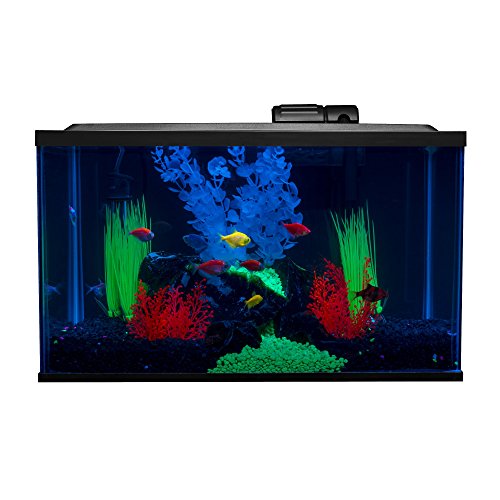
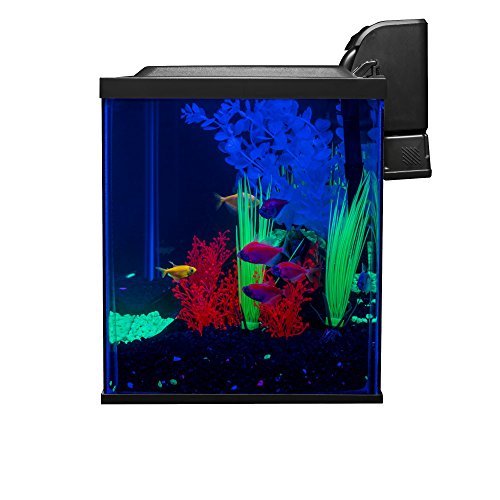
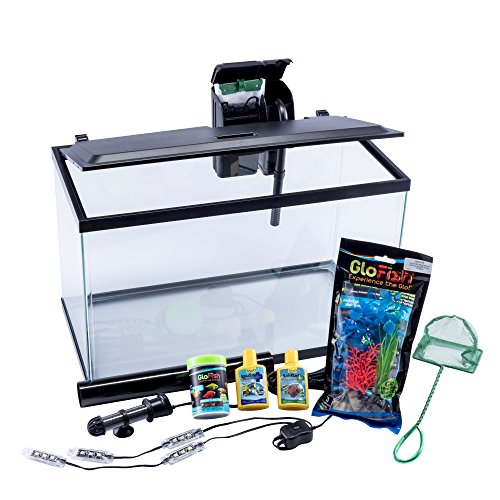
The GloFish Aquarium Fish Tank Kit is a complete 10-gallon setup designed to create a stunning underwater environment. This kit includes essential components like a glass aquarium, LED lighting system, Tetra Whisper Internal Filter, water conditioner, fish food sample, and a setup/care guide. Its unique blend of white and blue LED lights enhances the vibrancy of both GloFish fluorescent fish and tropical fish, while the internal filtration system maintains water clarity. This kit provides the foundation to create a captivating aquatic space.
- All-in-One Setup: Conveniently includes all necessary components for a starter aquarium, making it ideal for beginners or those new to keeping fish.
- Vibrant LED Lighting: The combination of white and blue LED lights enhances the appearance of GloFish and tropical fish, creating an eye-catching display.
- Internal Filtration System: The Tetra Whisper Internal Filter effectively keeps the water clean and clear, promoting a healthier environment for the fish.
- Additional Decor Costs: While the kit includes essentials, colorful GloFish gravel, plants, and décor mentioned may require separate purchases, adding to the overall cost.
- Limited Capacity: Being a 10-gallon tank, it may restrict the number or types of fish one can keep, particularly for larger or more active species.
- Potential Heater Issues: The heater included may cause temperature issues, possibly needing an upgrade for optimal conditions.
A complete 10-gallon aquarium kit can simplify the process of building your first setup.
Look for a kit containing:
- A glass aquarium
- LED lighting
- A secure hood or lid
- Basic filtration
- A heater if you plan to keep tropical fish
- A thermometer
Buying a kit can reduce the number of individual components you need to select.
A 10-gallon aquarium also gives beginners considerably more water volume than a bowl or tiny desktop tank. That additional water helps create more stable conditions.
Keep in mind that 10 gallons is still relatively small. Larger schooling fish, bigger communities, and many species may require a 20-gallon aquarium or larger.
Recommended for: First-time fishkeepers building a small freshwater aquarium.
2. Freshwater Liquid Water Test Kit


The API Freshwater Master Test Kit is a comprehensive and trusted solution for monitoring the health of your freshwater aquarium. With the ability to perform up to 800 tests, this kit includes everything you need: 7 bottles of testing solutions, 4 test tubes with caps, and a detailed color chart for accurate readings. It measures five critical water parameters—pH, high-range pH, ammonia, nitrite, and nitrate—ensuring your betta fish lives in clean, safe, and stable water conditions. Regular use of this kit helps prevent invisible water issues that can lead to stress, disease, or even loss of your fish.
- Comprehensive Testing: Covers all essential water parameters for freshwater tanks.
- Long-Lasting Value: Provides up to 800 tests, making it cost-effective over time.
- Accurate Results: Trusted by hobbyists and professionals for precise water readings.
- Manual Process: Requires measuring and comparing to color charts, which can be time-consuming.
- Storage Space: Comes in a relatively bulky box that may take up tank cabinet space.
- No Digital Display: Lacks digital convenience some modern testers offer.
Water quality cannot be judged by appearance alone.
A tank may look crystal clear while ammonia or nitrite is present.
Choose a freshwater liquid test kit capable of measuring at least:
- Ammonia
- Nitrite
- Nitrate
- pH
Testing is especially important when cycling a new aquarium.
After the aquarium becomes established, periodic testing helps identify changes before they develop into serious problems.
Record your results in a notebook or spreadsheet. Tracking trends can be more useful than looking at a single measurement.
Recommended for: Monitoring the aquarium cycle and diagnosing water-quality problems.
3. Concentrated Tap Water Conditioner


The Fluval AquaPlus Water Conditioner is an essential part of Neon Tetra care, ensuring safe and stress-free aquarium water. This all-natural formula instantly neutralizes harmful chlorine, chloramine, and heavy metals commonly found in tap water. Enriched with herbal extracts, it helps reduce fish stress during water changes or transportation, while its protective coating shields delicate Neon Tetra scales and fins from abrasions. Suitable for both freshwater and saltwater aquariums, this conditioner promotes a healthier, more stable environment for your tropical fish.
- Safe Water: Neutralizes chlorine and toxins instantly for healthy Neon Tetra habitats.
- Stress Relief: Herbal extracts calm fish during tank setup or maintenance.
- Protective Formula: Coats scales and fins to prevent minor injuries.
- Frequent Use: Must be reapplied with every water change.
- Mild Scent: Some users find the herbal aroma strong at first.
- Not Concentrated: Larger tanks may require higher dosages.
Municipal tap water can contain chlorine or chloramine, both of which can create problems for aquarium fish and beneficial microorganisms.
A freshwater water conditioner makes replacement tap water safer before it enters the aquarium.
Choose a concentrated formula designed to treat chlorine and chloramine. Always follow the dosing instructions on the package because concentrations vary between products.
Water conditioner is useful during initial setup, routine partial water changes, and emergency water replacements.
Recommended for: Anyone using municipal tap water for an aquarium.
4. Hang-on-Back Power Filter for 10 to 20 Gallon Tanks
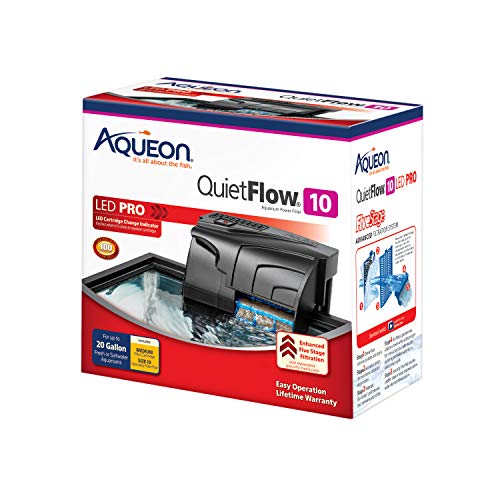


The Aqueon QuietFlow 10 LED PRO Aquarium Power Filter is a versatile filtration system designed for aquariums up to 20 gallons, catering to both freshwater and saltwater setups. Offering multi-stage filtration, it incorporates mechanical, chemical, and biological filtration, ensuring optimal water quality for fish health. This filter features an LED indicator that flashes when the cartridge becomes clogged, signaling the need for replacement. Its self-priming pump guarantees automatic startup or restart after power interruptions, while the internal pump design minimizes noise and prevents leaks. The filter's high flow rate promotes increased dissolved oxygen levels, fostering a healthier aquatic environment for more active and thriving fish.
- Comprehensive Filtration: Provides mechanical, chemical, and biological filtration, enhancing water quality by removing debris, impurities, and fostering beneficial bacteria growth.
- Convenience and Reliability: Self-priming pump ensures easy startup and restart after power interruptions, reducing maintenance hassles.
- Noise Reduction and Leak Prevention: Internal pump design dampens noise and prevents leaks, offering a quieter and secure filtration system for the aquarium.
- Cartridge Dependency: Reliance on specific Aqueon replacement cartridges might limit options and potentially increase ongoing maintenance costs.
- Limited Specialty Filtration: While offering optional specialty filter pads, the range might not cater to all specific filtration needs, requiring additional customization for certain setups.
- Bioholster Caution: Advises against cleaning the Bioholster during cartridge replacement as it contains beneficial bacteria, requiring extra care during maintenance to preserve the biological balance in the aquarium.
A simple hang-on-back filter is a practical filtration option for many beginner aquariums.
These filters typically hang on the rear wall of the tank and pull water through filtration media before returning it to the aquarium.
Look for a model that offers:
- Mechanical filtration
- Biological filtration
- Adjustable or appropriately gentle flow
- Easy access to reusable filter media
- A capacity suited to your aquarium size
Avoid automatically choosing the strongest possible flow. Bettas and other slower swimmers may struggle in excessive current.
Recommended for: Small freshwater community tanks requiring straightforward filtration.
What Makes a Fish Easy to Take Care Of?
Beginner-friendly fish tend to have several characteristics in common.
First, they are relatively adaptable. Some fish require very specific water chemistry or narrow temperature ranges, while easier species tolerate a broader range as long as conditions remain stable.
Second, easy fish usually accept readily available aquarium foods. Fish that willingly eat flakes, pellets, frozen foods, and other common diets are simpler to manage than highly specialized feeders.
Temperament also matters. Peaceful fish are generally easier to keep in community aquariums because compatibility problems are less likely. Highly territorial species may require carefully planned tankmates or dedicated aquariums.
Finally, hardy fish tend to tolerate small mistakes better than sensitive species. This does not mean poor water conditions are acceptable. It simply gives beginners a little more room to learn while developing good maintenance habits.
Easy Fish to Take Care Of at a Glance
| Fish | Beginner Level | Suggested Starting Tank | Social Needs | General Temperature Preference |
|---|---|---|---|---|
| Betta | Very Easy | 5+ gallons | Usually solitary | Tropical |
| Guppy | Very Easy | 10+ gallons | Social | Tropical |
| Platy | Very Easy | 10 to 20+ gallons | Social | Tropical |
| Zebra Danio | Very Easy | 10 to 20+ gallons | Schooling | Cool to tropical |
| White Cloud Mountain Minnow | Very Easy | 10+ gallons | Schooling | Cool |
| Harlequin Rasbora | Easy | 10 to 20+ gallons | Schooling | Tropical |
| Corydoras | Easy | 15 to 20+ gallons depending on species | Group dwelling | Tropical |
| Neon Tetra | Easy | 10 to 20+ gallons | Schooling | Tropical |
Tank requirements depend on the exact species, number of fish, adult size, tank dimensions, filtration, and other inhabitants. Always research the individual species before stocking.
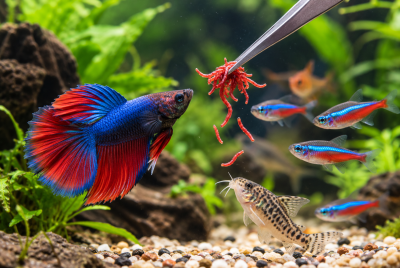
1. Betta Fish
Bettas are among the most popular beginner aquarium fish because they are colorful, interactive, and relatively straightforward to care for.
They are tropical freshwater fish and do best when their water remains warm and stable. A heater is generally necessary unless the surrounding environment consistently maintains an appropriate temperature.
A common misconception is that bettas can permanently live in bowls because they are capable of breathing atmospheric oxygen from the water’s surface. Their specialized respiratory system helps them survive challenging conditions in nature, but it does not eliminate their need for clean water, swimming space, filtration, and a stable environment.
A five-gallon aquarium or larger is a much more practical starting point.
Bettas generally accept quality pellets along with appropriately sized frozen or live foods as occasional dietary variety.
Male bettas are territorial and should not normally be housed together. Tankmates may be possible in sufficiently large aquariums, but compatibility depends on the individual fish.
Best for: Beginners who want one colorful centerpiece fish.
2. Guppies
Guppies are another classic choice for first-time fishkeepers.
They stay relatively small, come in many colors, are active throughout the aquarium, and readily accept common prepared foods. They also adapt well to many typical freshwater aquarium conditions when water quality remains stable.
Guppies are social fish, so they are better suited to small groups than solitary living.
One important consideration is reproduction. Guppies are livebearers and can reproduce rapidly when males and females are housed together. A beginner who starts with a few fish may quickly find themselves caring for many more.
A male-only setup can help control population growth, although adequate swimming space and careful observation of interactions are still important.
Guppies generally prefer harder, mineral-rich water compared with certain soft-water fish.
Best for: Beginners who want colorful, active fish in a community aquarium.
3. Platies
Platies are hardy, colorful livebearers that adapt well to beginner community aquariums.
They are usually peaceful, readily accept standard aquarium foods, and come in a wide range of colors and patterns.
Platies are active without being excessively aggressive, making them suitable companions for many other peaceful fish that prefer similar water conditions.
Like guppies, they reproduce readily. Mixed-sex groups can produce fry regularly, so population management should be considered before bringing them home.
They generally appreciate moderately hard water and stable tropical temperatures.
A planted aquarium can provide additional cover while still leaving open areas for swimming.
Best for: Beginners interested in a colorful and peaceful community tank.
4. Zebra Danios
Zebra danios are excellent beginner fish because of their hardiness and active behavior.
These small fish are easy to recognize by the horizontal stripes running along their bodies. They spend much of their time swimming through open water and can bring constant movement to an aquarium.
Danios are schooling fish and should be kept in groups. Keeping too few can increase stress and may change their behavior.
Because they are energetic swimmers, tank length is important. A longer aquarium provides better swimming space than a tall, narrow tank of similar volume.
Zebra danios tolerate somewhat cooler temperatures than many common tropical species. This makes them flexible, although their tankmates should still share compatible temperature requirements.
They readily eat flakes, small pellets, and appropriately sized frozen foods.
Best for: Beginners who want hardy and highly active schooling fish.
5. White Cloud Mountain Minnows
White cloud mountain minnows are an excellent option for beginners interested in a cooler freshwater aquarium.
They are small, peaceful, attractive, and generally hardy when kept under appropriate conditions.
Unlike many common beginner fish, white clouds do not require particularly warm tropical water. In homes where temperatures naturally remain within their preferred range, they may not require a heater.
They should still be protected from sudden temperature changes.
White clouds are schooling fish, so a group is preferable. Their behavior becomes much more interesting when they can interact naturally with members of their own species.
They accept flakes, micro pellets, and small frozen foods.
Because they prefer cooler conditions, avoid automatically pairing them with tropical fish that require consistently higher temperatures.
Best for: Beginners wanting a simple cool-water community setup.
6. Harlequin Rasboras
Harlequin rasboras are peaceful schooling fish well suited to established beginner aquariums.
Their copper-colored bodies and dark triangular markings make them visually distinctive without requiring complicated care.
They prefer being kept in groups and often look particularly impressive when several move through the aquarium together.
Rasboras appreciate a combination of vegetation and open swimming areas. Live plants can provide cover while creating a more natural environment.
They readily eat appropriately sized flakes, pellets, and frozen foods.
Their peaceful temperament makes them suitable companions for many other small community fish with similar temperature and water requirements.
Best for: Beginners creating peaceful planted community tanks.
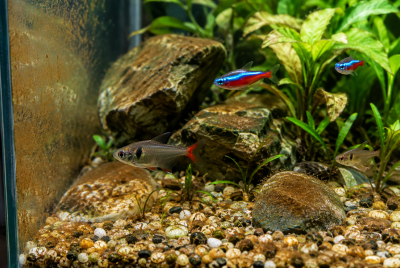
7. Corydoras Catfish
Corydoras are small bottom-dwelling catfish known for their peaceful personalities and active group behavior.
They spend much of their time exploring the substrate, searching for food, and interacting with one another.
One common beginner mistake is purchasing a single corydoras as a “cleanup fish.” Corydoras are social animals and should generally be kept in groups of the same or compatible species.
They also need dedicated food. They cannot survive simply by eating whatever other fish leave behind.
Sinking pellets or wafers and appropriately sized frozen foods can form part of a balanced diet.
The substrate should also be considered carefully. Smooth sand or fine, non-sharp material allows them to forage naturally without damaging their sensitive mouth area.
Different corydoras species have different adult sizes, so the minimum aquarium size varies.
Best for: Beginners who want peaceful bottom-dwelling fish in a community aquarium.
8. Neon Tetras
Neon tetras are among the most recognizable freshwater aquarium fish.
Their blue and red coloration becomes especially striking when a group swims together against plants and darker aquarium decor.
They are peaceful schooling fish and are best kept in groups rather than individually or in pairs.
Neon tetras are generally straightforward to feed. Small flakes, micro pellets, and appropriately sized frozen foods are commonly accepted.
They are slightly less forgiving of unstable conditions than some of the hardier fish on this list. For this reason, they are better suited to an aquarium that has already completed its initial cycling process and has stable water parameters.
Once the aquarium is established, they can be relatively easy to maintain.
Best for: Beginners with a stable, established community aquarium.
How to Make Your First Aquarium Easier to Maintain
Choosing easy fish helps, but creating a stable aquarium is even more important.
Cycle the Aquarium Before Adding Fish
Fish produce ammonia through waste and normal biological processes. Uneaten food and decomposing organic material can also contribute ammonia.
Beneficial microorganisms gradually establish in the aquarium and filter. They convert ammonia into nitrite and then help convert nitrite into nitrate.
This process forms the foundation of biological filtration.
Do not assume that filling an aquarium with water immediately makes it ready for fish. Establishing the biological system beforehand significantly reduces the risk of exposing fish to dangerous waste.
Choose a Larger Tank When Possible
Tiny tanks are often marketed to beginners because they appear simple.
In practice, small volumes of water can be less forgiving.
If something changes in a five-gallon aquarium, it can affect the overall environment much faster than the same change in a 20-gallon aquarium.
Additional water volume helps buffer fluctuations in temperature and chemistry.
If your budget and available space allow it, a 10 to 20-gallon aquarium is often a comfortable starting range for new fishkeepers.
Perform Regular Partial Water Changes
Routine water changes help control nitrate and remove dissolved waste.
The ideal schedule depends on stocking level, aquarium size, feeding, filtration, plant growth, and water-test results.
Partial changes are generally preferable to repeatedly replacing all of the aquarium water.
Always condition new tap water and try to match its temperature reasonably closely to the aquarium before adding it.
Avoid Overfeeding
Overfeeding is one of the easiest mistakes to make.
Fish often behave as if they are hungry even when they have already eaten.
Excess food eventually decomposes, increasing the waste load inside the aquarium.
Feed quantities appropriate for the species, age, and number of fish you keep.
Government aquarium-care guidance notes that overfeeding can cause health problems and recommends providing only an appropriate quantity of food.
Avoid Overstocking
A tank filled with too many fish can become difficult to maintain regardless of how hardy those species are.
Every fish adds to the aquarium’s biological load.
Overcrowding can increase:
- Ammonia production
- Nitrate accumulation
- Competition for food
- Territorial conflict
- Stress
- Disease transmission
Plan stocking according to adult fish size rather than the size of juvenile fish in the store.
Add Fish Gradually
Avoid purchasing an entire community at once.
Adding fish gradually allows biological filtration to adapt to the increasing waste load and gives you time to observe each addition.
It also makes compatibility problems easier to identify.
Watch Your Fish Every Day
Observation is one of the simplest forms of aquarium maintenance.
Healthy fish generally develop predictable routines. You may notice where they swim, when they eat, which areas they prefer, and how they interact.
Changes can provide early warning signs.
Government aquarium guidance recommends monitoring abnormal behavior and checking water quality, temperature, and pH when something changes.
Watch for:
- Gasping at the surface
- Clamped fins
- Unusual hiding
- Loss of appetite
- Rapid breathing
- White spots
- Damaged fins
- Erratic swimming
- Swollen areas
- Sudden inactivity
Test the water first whenever something appears wrong.
What Fish Should Beginners Avoid?
Some fish commonly sold in stores are more complicated than they initially appear.
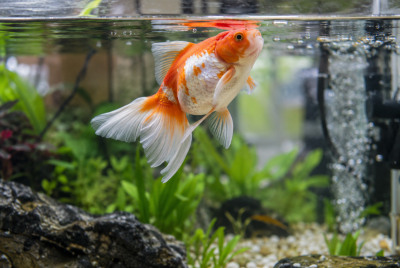
Goldfish
Goldfish are hardy, but that does not automatically make them easy beginner fish.
Many varieties grow much larger than expected and produce significant amounts of waste. Their long-term space and filtration requirements are considerably greater than a small bowl can provide.
Large Plecos
Small juvenile plecos may look perfect for a beginner aquarium, but some species can grow very large.
Always identify the exact species and research its adult size before purchasing.
Highly Aggressive Fish
Territorial species can require specialized stocking arrangements, large tanks, careful aquascaping, or species-only setups.
Beginners often have an easier experience starting with peaceful community species.
Very Sensitive Species
Fish requiring extremely narrow water parameters can be challenging when you are still learning how aquarium chemistry works.
Start with adaptable species and gradually explore more specialized fish as your experience grows.
Which Easy Fish Should You Choose?
The best fish depends on the aquarium you want.
Choose a betta if you prefer one colorful centerpiece fish.
Consider guppies or platies if you enjoy active and colorful livebearers.
Choose zebra danios if you want hardy schooling fish with lots of activity.
Consider white cloud mountain minnows for a cooler aquarium.
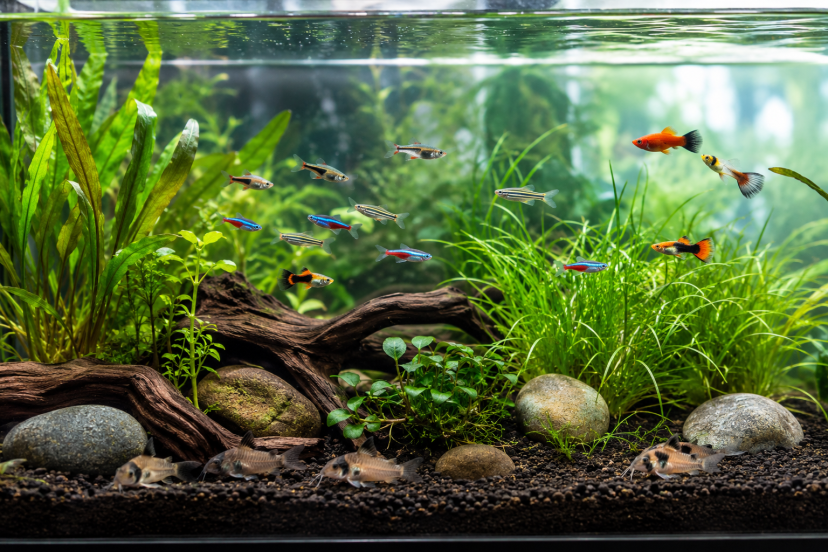
Choose harlequin rasboras or neon tetras for a peaceful planted community.
Add corydoras if you want social bottom-dwelling fish that bring activity to the lower part of the tank.
Rather than asking only which fish is easiest, ask which fish naturally fits the tank you are willing to provide.
Matching the aquarium to the species from the beginning is the simplest way to make fishkeeping easier.
FAQs About Easy Fish to Take Care Of
1. What is the easiest fish to take care of for beginners?
Bettas, guppies, platies, zebra danios, and white cloud mountain minnows are among the easiest freshwater fish for beginners. The best option depends on your aquarium size, temperature, water chemistry, and whether you want a single fish or a group.
2. What fish requires the least maintenance?
No fish is completely maintenance-free. Hardy freshwater species can be relatively simple to care for, but they still require a properly sized aquarium, suitable water temperature, filtration, feeding, water testing, and regular partial water changes.
3. What is the easiest fish to keep in a small tank?
A single betta can be a good option for a properly heated and filtered aquarium of about five gallons or larger. Schooling species generally need more space because several fish must be kept together, making larger aquariums more appropriate.
4. Are freshwater fish easier to care for than saltwater fish?
Freshwater aquariums are generally more approachable for beginners because they usually involve simpler water preparation and less specialized equipment. Government animal-welfare guidance also notes that saltwater systems require greater experience and knowledge to set up and maintain successfully.
5. How many fish should a beginner start with?
There is no universal number because stocking depends on species, adult size, aquarium dimensions, filtration, and social requirements. It is usually better to begin conservatively and add compatible fish gradually rather than immediately filling the tank to its estimated maximum capacity.
Final Thoughts
The easiest fish to take care of are not necessarily the fish that can tolerate the poorest conditions. They are species whose needs are straightforward enough for beginners to meet consistently.
Bettas, guppies, platies, danios, white cloud mountain minnows, rasboras, corydoras, and neon tetras can all make rewarding first fish when housed correctly.
Your equipment and maintenance habits matter just as much as your species choice. Start with an appropriately sized aquarium, establish biological filtration before stocking, test the water regularly, avoid overfeeding, and add fish gradually.
Once those fundamentals are in place, caring for a freshwater aquarium becomes considerably easier, and you can spend more time enjoying the fish instead of constantly solving preventable problems.