Swim Bladder Disease in Fish: Causes, Symptoms, Treatment, and Prevention
*We may earn a commission for purchases made using our links. Please see our disclosure to learn more.
Swim bladder disease is one of the most noticeable, and often misunderstood, health problems in aquarium fish. A fish that suddenly floats at the surface, sinks to the bottom, swims sideways, or struggles to stay upright can alarm even experienced fishkeepers.
Despite the common name, swim bladder disease is not always a single disease. It is better understood as a buoyancy disorder that can develop when the swim bladder itself, surrounding organs, water conditions, diet, infection, injury, or body shape interfere with normal swimming.
The swim bladder is a gas-filled organ in many bony fish that helps regulate buoyancy. By adjusting the amount of gas inside the bladder, a fish can remain at a particular depth without continuously swimming. In some species, the swim bladder may also assist with functions such as sound production and sensing changes in the surrounding environment.
Because abnormal swimming can have many causes, successful treatment begins by identifying what is actually wrong rather than immediately adding medication to the aquarium.
Key Takeaways
A quick summary of the most important things to know about swim bladder disease in aquarium fish.
Four Useful Products for Managing a Fish With Buoyancy Problems
These are supportive fishkeeping products rather than cures for swim bladder disease. Product listings and availability can change.
1. API Freshwater Master Test Kit


The API Freshwater Master Test Kit is a comprehensive and trusted solution for monitoring the health of your freshwater aquarium. With the ability to perform up to 800 tests, this kit includes everything you need: 7 bottles of testing solutions, 4 test tubes with caps, and a detailed color chart for accurate readings. It measures five critical water parameters—pH, high-range pH, ammonia, nitrite, and nitrate—ensuring your betta fish lives in clean, safe, and stable water conditions. Regular use of this kit helps prevent invisible water issues that can lead to stress, disease, or even loss of your fish.
- Comprehensive Testing: Covers all essential water parameters for freshwater tanks.
- Long-Lasting Value: Provides up to 800 tests, making it cost-effective over time.
- Accurate Results: Trusted by hobbyists and professionals for precise water readings.
- Manual Process: Requires measuring and comparing to color charts, which can be time-consuming.
- Storage Space: Comes in a relatively bulky box that may take up tank cabinet space.
- No Digital Display: Lacks digital convenience some modern testers offer.
A water test kit is one of the most useful tools when investigating abnormal fish behavior.
The API Freshwater Master Test Kit measures:
- Ammonia
- Nitrite
- Nitrate
- pH
- High-range pH
API states that these parameters can change rapidly as waste and uneaten food accumulate and that abnormal levels can harm fish.
Best for: Diagnosing water-quality problems before attempting medication.
2. Seachem Prime Water Conditioner


Seachem Prime is a powerful, concentrated water conditioner that ensures your betta fish thrives in a clean and safe environment. This 500 mL bottle treats up to 5,000 gallons of water, making it both effective and economical. It instantly removes chlorine and chloramine, and detoxifies ammonia, nitrite, and heavy metals, allowing your aquarium's biofilter to work more efficiently. Whether you're performing a water change or setting up a new tank, Prime provides immediate protection, creating a stress-free habitat for your betta.
- Highly Concentrated: A little goes a long way—500 mL treats up to 5,000 gallons.
- Broad Protection: Neutralizes chlorine, chloramine, ammonia, nitrite, and heavy metals.
- Emergency Use: Can be safely dosed up to 5x in urgent situations.
- Strong Odor: Has a noticeable sulfur smell some users find unpleasant.
- Precise Dosing Needed: Overdosing can cause confusion without proper measuring.
- No Built-in Dropper: Requires separate tool or care for small tank dosing.
Whenever performing partial water changes, tap water should be treated appropriately for chlorine or chloramine.
Seachem Prime is a concentrated freshwater and saltwater conditioner widely used by aquarium keepers.
Best for: Preparing replacement water during routine maintenance or corrective water changes.
It should be considered a water conditioner, not a treatment for the underlying swim bladder disorder.
3. EHEIM Jäger Aquarium Heater

- Submersible Design: Ensures full submersion for even heat distribution throughout the aquarium.
- Safety Features: Thermo safety control prevents the heater from running dry and automatically shuts off if the water level becomes too low.
- Precision Temperature Control: The TruTemp dial allows for precise calibration and adjustment of the heater's temperature settings.
- Fragility Concerns: While made with shock-resistant glass, any glass-based equipment poses a risk of breakage if handled improperly.
- Initial Calibration: Some users may find it requires initial calibration to match their desired temperature settings accurately.
- Limited Wattage: The 100W version might be suitable for smaller tanks but may require multiple units for larger aquariums, increasing costs.
Stable temperature is important for tropical fish.
An adjustable heater such as the EHEIM Jäger can help maintain a consistent aquarium temperature when correctly sized for the tank.
Best for: Tropical aquariums where temperature instability may be contributing to stress.
Always choose a heater wattage appropriate for the aquarium size and confirm the temperature with a separate thermometer.
4. Hikari Sinking Fish Food


Give your bottom-dwelling fish the nutrition they deserve with Hikari Tropical Sinking Wafers. Specially formulated for catfish, loaches, and other bottom feeders, these wafers feature a seafood-based blend rich in spirulina, silkworm, and krill. The small disc shape ensures easy access for a variety of fish sizes, and the slow-softening texture allows both large and small fish to feed comfortably. Scientifically developed to support health and growth, this food also helps maintain water clarity thanks to its high digestibility. It's a trusted choice for hobbyists who want vibrant, thriving fish and a cleaner tank.
- Targeted Nutrition: Formulated specifically for catfish, loaches, and bottom feeders.
- Highly Digestible: Helps reduce waste and maintain cleaner water.
- Softening Design: Gradually softens for easy feeding by fish of all sizes.
- Not Ideal for Top Feeders: Designed for bottom dwellers only.
- May Attract Snails: Uneaten food can attract unwanted tank pests.
- Small Package Size: 3.88 oz may go quickly in heavily stocked tanks.
A quality sinking diet may help certain fish that gulp air while eating floating foods.
This can be particularly useful for some goldfish and other surface-feeding fish experiencing recurrent buoyancy problems.
Best for: Fish that appear to swallow excessive air while eating floating pellets or flakes.
Select a Hikari sinking formula specifically appropriate for your fish species rather than choosing food based solely on sinking ability.
What Is Swim Bladder Disease?
The swim bladder is an internal gas-filled structure found in many species of bony fish. It helps fish maintain neutral buoyancy, meaning they can remain suspended at a particular depth without constantly swimming upward or downward.
Fish regulate their swim bladders differently depending on the species.
Some fish are physostomous, meaning the swim bladder is connected to the digestive tract through a pneumatic duct. These fish may regulate buoyancy partly by gulping air.
Other fish are physoclistous and do not retain this open connection as adults. Instead, gases are moved between the bloodstream and swim bladder internally.
When normal swim bladder function is disrupted, a fish may become:
- Positively buoyant, causing it to float toward the surface
- Negatively buoyant, causing it to sink
- Unable to maintain a stable horizontal position
- Unable to control depth efficiently
Affected fish may float, sink, swim sideways, or maintain unusual body positions depending on the type and severity of the buoyancy problem. These changes can make it difficult for the fish to control its depth, stay upright, or reach food normally.
Symptoms of Swim Bladder Disease
The most recognizable symptoms involve abnormal swimming.
Common signs include:
- Floating uncontrollably at the surface
- Sinking repeatedly to the bottom
- Swimming upside down
- Floating sideways
- Swimming vertically with the head up or down
- Rolling while attempting to swim
- Difficulty reaching food
- Struggling to remain at one depth
- Resting unusually on the substrate
- Excessive effort when swimming
- Reduced activity
- Loss of appetite
A fish with a buoyancy disorder may otherwise appear completely normal. However, additional symptoms can indicate that another illness is responsible.
Watch for:
- Abdominal swelling
- Bulging eyes
- Raised scales
- Redness or sores
- Rapid breathing
- Faded coloration
- White spots
- Stringy feces
- Weight loss
- Bent spine
- Visible injury
These additional signs are important because abnormal swimming can also occur with infections, neurological disorders, kidney problems, toxins, or severe water-quality problems.
What Causes Swim Bladder Disease?
There is no single cause. The most effective treatment depends on identifying the underlying problem.
1. Poor Water Quality
Water quality should be one of the first things you investigate whenever a fish begins behaving abnormally.
Elevated ammonia or nitrite can damage gills, stress fish, and interfere with normal physiological functions.
Poor water conditions can also suppress immune function, increasing susceptibility to secondary infections.
Increase water testing whenever fish show signs of illness. Stressful events, sudden environmental changes, and unstable water conditions can all contribute to health problems, including buoyancy and swim bladder disorders.
Test:
- Ammonia
- Nitrite
- Nitrate
- pH
- Temperature
For a mature freshwater aquarium, ammonia and nitrite should generally remain at 0 ppm.
2. Overfeeding and Digestive Problems
Digestive issues are commonly associated with buoyancy problems, particularly in goldfish.
Overfeeding can contribute to:
- Constipation
- Intestinal expansion
- Excessive waste production
- Poor water quality
Improper feeding can contribute to obesity, constipation, digestive problems, and buoyancy issues in aquarium fish. Overfeeding may also increase waste in the tank, which can lead to poorer water quality and additional stress.
Some fish may also swallow excessive air when eating floating foods.
This does not mean every fish with a buoyancy problem is simply constipated. Persistent or severe symptoms warrant further investigation.
3. Body Shape and Genetics
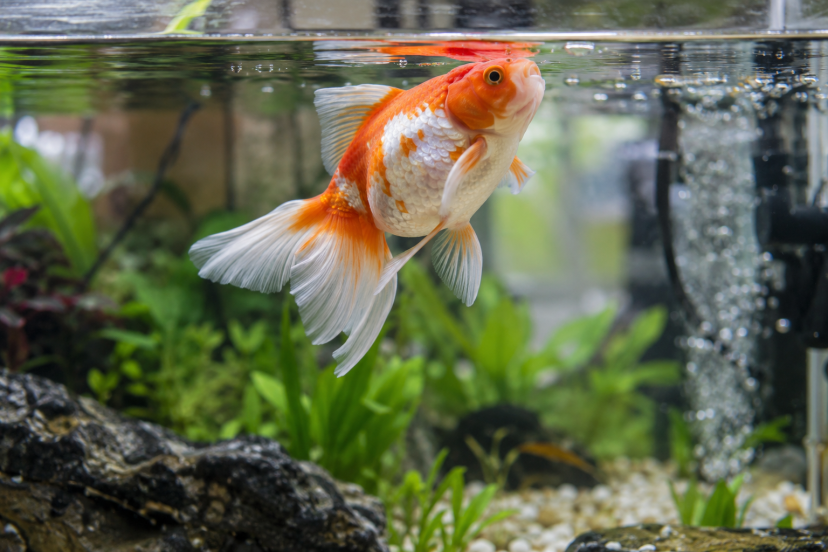
Fancy goldfish are especially prone to buoyancy problems because selective breeding has produced short, rounded bodies.
Their internal organs are compressed into a smaller body cavity, which can affect the position and function of the swim bladder.
Fancy goldfish with rounded bodies and altered spinal structures can be more prone to swim bladder problems because their compact body shape may place additional pressure on internal organs and affect normal buoyancy.
Affected breeds can include:
- Orandas
- Ranchus
- Ryukins
- Pearlscales
- Fantails
- Bubble Eyes
Some fish may develop chronic buoyancy problems that cannot be completely cured.
4. Infection or Inflammation
Bacterial or parasitic infections can occasionally affect the swim bladder or nearby tissues.
Inflammation may interfere with normal inflation or positioning of the organ.
However, antibiotics should not automatically be used whenever a fish floats strangely.
Fish diseases frequently produce similar symptoms, and unnecessary medication can disrupt biological filtration or expose fish to inappropriate drugs.
Aquarium fish diseases can result from bacteria, parasites, viruses, fungi, environmental stress, poor water quality, or overcrowding. Because many conditions can cause similar symptoms, it is important to consider the fish’s environment, behavior, and other physical signs before choosing a treatment.
5. Enlarged Internal Organs
The swim bladder sits among other organs inside the body cavity.
If another organ becomes enlarged, it may push against or displace the swim bladder.
Possible causes include:
- Kidney disease
- Liver enlargement
- Tumors
- Egg retention
- Internal fluid accumulation
- Cysts
For example, University of Florida aquatic veterinary guidance describes kidney disease in goldfish that can enlarge the kidneys enough to displace the swim bladder and cause buoyancy problems.
6. Trauma
Physical injuries may damage the swim bladder or surrounding structures.
Possible causes include:
- Collisions with decorations
- Rough handling
- Aggressive tank mates
- Jumping from the aquarium
- Improper netting
- Transportation injuries
A fish that suddenly develops swimming problems after an obvious injury should be monitored carefully.
7. Temperature Problems
Fish are ectothermic, meaning their body temperature depends on their environment.
Water that is significantly too cold or fluctuates rapidly can reduce metabolic and digestive activity.
Because temperature requirements vary by species, there is no single correct aquarium temperature.
Research the normal range for your particular fish and avoid sudden changes.
Swim Bladder Disease in Goldfish
Goldfish are among the fish most commonly associated with buoyancy problems.
Fancy goldfish are particularly vulnerable because their shortened body shape can crowd their digestive tract and swim bladder.
Goldfish are also physostomous fish, meaning they retain a connection between the digestive system and swim bladder.
Fish that repeatedly swallow air while feeding at the surface may therefore benefit from switching to a sinking or neutrally buoyant diet.
Feeding sinking or neutrally buoyant foods may help some goldfish that tend to swallow excessive air while eating at the surface. This can be especially useful for fish that repeatedly develop buoyancy problems after feeding.
How to Treat Swim Bladder Disease
Because swim bladder disease has multiple causes, treatment should focus on correcting the underlying problem.
Step 1: Test the Water
Check the aquarium immediately.
Measure:
- Ammonia
- Nitrite
- Nitrate
- pH
- Temperature
If ammonia or nitrite are detectable, perform an appropriate partial water change using conditioned water with a temperature close to the aquarium.
Do not completely replace all aquarium water or sterilize the biological filter.
Beneficial bacteria in the filter are essential for processing toxic nitrogen waste.
Step 2: Improve Water Quality
Remove uneaten food and obvious waste.
Make sure the filter is functioning correctly and that adequate oxygenation is available.
Avoid aggressively cleaning biological filter media under untreated tap water because chlorine or chloramine can damage beneficial bacteria.
Stable water quality reduces stress and gives the fish a better chance of recovering.
Step 3: Review Feeding
If digestive problems are suspected, reconsider how much and what you are feeding.
Avoid repeatedly feeding large portions.
Many fish do well with one or two appropriately sized meals per day, although feeding frequency varies by species and age.
Remove uneaten food after feeding.
For fish prone to swallowing air at the surface, consider switching from floating flakes or pellets to a suitable sinking formula.
Step 4: Reduce Physical Stress
A fish that cannot control its position can become injured.
For sinking fish:
- Keep the bottom clean
- Remove rough decorations
- Use smooth surfaces
- Reduce strong currents
For floating fish:
- Make sure exposed skin does not remain dry for extended periods
- Keep water clean
- Avoid makeshift weights or flotation devices
Avoid attaching floats or weights to a fish unless specifically advised by an aquatic veterinarian. Improvised devices can rub against the body, damage the protective mucus layer, and create additional stress or skin injuries.
Step 5: Consider a Hospital Tank
A separate hospital tank can make observation easier if the fish is being bullied or requires individualized care.
A hospital tank should have:
- Clean conditioned water
- Stable temperature
- Gentle filtration
- Adequate aeration
- Minimal decorations
- Easy access to food
Do not move the fish unnecessarily if transfer itself is likely to create significant stress.
Should You Use Peas for Swim Bladder Disease?
Cooked peas are one of the most frequently recommended home remedies for goldfish.
They may provide fiber for some omnivorous fish, but peas are not a universal treatment for swim bladder disease.
A fish with:
- Infection
- Kidney disease
- Tumors
- Trauma
- Structural deformity
- Neurological disease
will not be cured simply by eating peas.
Dietary adjustments may help when constipation or feeding habits contribute to the problem, but they should not replace proper diagnosis.
Should You Use Aquarium Salt?
Aquarium salt is sometimes recommended online for almost every fish health problem.
That is not appropriate.
Different fish species have different tolerances to salinity.
Salt may be useful in specific situations, but inappropriate dosing can stress freshwater species, plants, invertebrates, or fish with certain conditions.
Salinity adjustments should be made carefully because fish species vary widely in their tolerance to salt. Using too much salt can cause additional stress, especially in sensitive freshwater fish, plants, and invertebrates.
Should You Use Antibiotics?
Only when there is good reason to suspect bacterial disease.
Antibiotics will not fix:
- Constipation
- Genetic deformity
- Poor water quality
- Tumors
- Physical injury
- Organ displacement
Using antibiotics unnecessarily can complicate diagnosis and potentially affect aquarium bacteria.
An aquatic veterinarian is the best person to diagnose suspected internal infections.
How Long Does Swim Bladder Disease Last?
Recovery time varies dramatically.
Minor cases associated with feeding or temporary environmental stress may improve within several days.
Cases caused by infection or inflammation can take longer.
Structural deformities, spinal problems, damaged swim bladders, tumors, or chronic organ displacement may be permanent.
Some fish can live for years with chronic buoyancy abnormalities if they can:
- Eat successfully
- Avoid injury
- Breathe normally
- Rest comfortably
- Maintain reasonable quality of life
Some fish with permanent swim bladder problems can still maintain a good quality of life with supportive environmental adjustments. Keeping the tank easy to navigate, minimizing strong currents, maintaining excellent water quality, and making food easier to reach can help affected fish function more comfortably.
How to Prevent Swim Bladder Problems
Prevention starts with basic aquarium husbandry.
Maintain Stable Water Quality
Test regularly, especially in new aquariums.
Ammonia and nitrite problems are common when biological filtration has not fully matured. In a newly established aquarium, there may not yet be enough beneficial bacteria to process fish waste efficiently, allowing toxic ammonia and nitrite to build up and stress the fish.
Avoid Overfeeding
Feed appropriately sized portions.
Remove leftover food.
Overfeeding contributes both to digestive problems and deteriorating water quality.
Use an Appropriate Diet
Choose food designed for the species you keep.
For fish prone to surface air gulping, consider sinking food.
Maintain Stable Temperature
Avoid large temperature swings.
Use an appropriately sized heater for tropical species and monitor it with a reliable thermometer.
Quarantine New Fish
New fish can introduce parasites, bacteria, or other diseases.
The Merck Veterinary Manual recommends good water quality, nutrition, sanitation, and quarantine as core components of preventive fish health care.
Avoid Overcrowding
Overcrowding increases:
- Waste
- Stress
- Competition
- Aggression
- Disease transmission
Stock fish according to their adult size and biological needs rather than relying on simple rules such as “one inch of fish per gallon.”
When Should You Contact a Veterinarian?
Seek help from a veterinarian experienced with aquatic animals when:
- The fish cannot eat
- Abnormal swimming persists
- The abdomen is severely swollen
- Scales begin sticking outward
- The fish develops sores or bleeding
- Breathing becomes difficult
- Multiple fish are affected
- Symptoms worsen despite good water quality
- You suspect infection, internal disease, or trauma
Veterinarians can use diagnostic tools such as radiographs to examine the size, shape, and position of the swim bladder and determine whether internal organs are affecting it.
Final Thoughts
Swim bladder disease can look dramatic, but abnormal buoyancy does not automatically mean a fish is dying.
The most important first step is to determine why the fish is having difficulty swimming.
Test the water before adding medications. Check temperature, feeding habits, recent changes, tank mates, and any other symptoms.
Some cases improve quickly after water quality or diet is corrected. Others are caused by infection, internal disease, injury, or structural abnormalities that require professional diagnosis.
Good aquarium care, stable water parameters, appropriate feeding, proper filtration, quarantine, and regular observation—remains the best defense against both swim bladder problems and many other fish health issues.
Frequently Asked Questions
1. Can a fish recover from swim bladder disease?
Yes. Fish can recover when the underlying cause is reversible, such as poor water quality, dietary problems, or temporary inflammation. Structural abnormalities, chronic organ disease, or severe injury may cause permanent buoyancy problems.
2. Why is my fish floating upside down?
Floating upside down can indicate a buoyancy disorder, but it does not reveal the exact cause. Possible reasons include digestive problems, swim bladder dysfunction, poor water quality, infection, organ enlargement, injury, or structural abnormalities. Test the water immediately and observe the fish for additional symptoms.
3. Should I stop feeding a fish with swim bladder disease?
Not automatically. Brief feeding adjustments may be appropriate in certain cases involving digestive problems, but long periods without food can weaken the fish. Feeding strategy should depend on the species, condition, and suspected cause.
4. Is swim bladder disease contagious?
The buoyancy problem itself is not contagious. However, if the underlying cause is an infectious disease, the pathogen responsible may spread to other fish. Quarantine may be appropriate when infection is suspected.
5. Can poor water quality cause swim bladder problems?
Yes. Poor water quality can create severe physiological stress and is one of the first issues that should be investigated when a fish develops abnormal swimming behavior. Test ammonia, nitrite, nitrate, pH, and temperature before assuming the problem is purely dietary or infectious.