Bloodworms for Fish: Benefits, Types, and Feeding Guide
*We may earn a commission for purchases made using our links. Please see our disclosure to learn more.
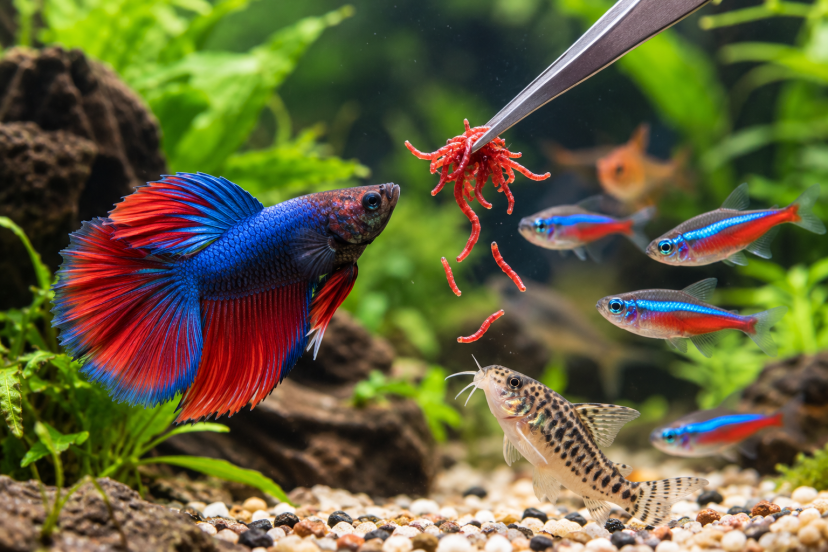
Bloodworms are one of the most popular treats in fishkeeping, and it’s easy to see why. Their bright red color, soft texture, and natural appeal make them a favorite among bettas, tetras, discus, and many other aquarium fish.
But are bloodworms actually good for fish? And how often should you feed them?
While bloodworms provide valuable protein and encourage natural feeding behaviors, they shouldn’t replace a balanced diet. Feeding too many or choosing the wrong type can lead to nutritional imbalances, uneaten food, and water quality problems.
This guide covers everything you need to know about bloodworms for fish, including their nutritional benefits, different types, safe feeding methods, and four recommended products.
“They are an excellent way to provide more variety and nutrition to your fish’s diet.”
— Aquarium Co-Op,
Key Takeaways
Everything you need to know about feeding bloodworms to fish.
Bloodworms are midge larvae, not true worms, and are a natural food source for many freshwater fish.
Rich in protein, bloodworms can support growth and add nutritional variety to fish diets.
Live, frozen, and freeze-dried bloodworms are available, each with different benefits and handling needs.
Feed once or twice weekly as a starting point for many community fish, depending on species and diet.
Bettas, tetras, and angelfish are among the many aquarium fish that enjoy bloodworms as treats.
Prepare bloodworms properly: thaw frozen portions and soak freeze-dried worms before serving.
Avoid overfeeding. Offer small portions and remove leftovers to help maintain good water quality.
Choose reputable brands and remember that bloodworms should complement, not replace, complete fish food.
4 Best Bloodworm Products for Fish
Choosing a reputable product helps make supplemental feeding more convenient. These four established options are particularly worth considering.
1. Hikari Bio-Pure Freeze-Dried Blood Worms — Best Overall


Hikari Bio-Pure Freeze-Dried Blood Worms are a high-protein treat for bettas, tetras, angelfish, and other tropical fish. These vitamin-enriched bloodworms help add variety to your fish's diet while encouraging natural feeding behavior. The freeze-dried formula is easy to store, portion, and serve without refrigeration.
- High Protein: Supports growth and healthy body maintenance.
- Vitamin-Enriched: Adds supplemental nutrients to your fish's diet.
- Easy Storage: No refrigeration or thawing required.
- Small Container: The 0.42 oz size may run out quickly.
- Floating Food: May need soaking before feeding.
- Supplemental Only: Not a replacement for a balanced diet.
Hikari Bio-Pure Freeze-Dried Blood Worms are a versatile choice for fishkeepers who want a protein-rich treat with added vitamins.
The formula contains freeze-dried bloodworms along with several vitamin supplements, including vitamins B12 and C.
According to Hikari, the product contains at least 55% crude protein and is suitable for many freshwater tropical fish.
What we like: Vitamin-enriched formula, convenient storage, and availability in different container sizes.
Considerations: The worms may float and should be softened before feeding, especially for smaller fish.
Best for: Community aquariums, bettas, angelfish, and fishkeepers seeking a versatile supplementary food.
2. Tetra BloodWorms Freeze-Dried Fish Food — Best for Beginners


Tetra BloodWorms offer a protein-rich, freeze-dried treat ideal for both freshwater and saltwater fish. Sourced from real bloodworms, this seafood snack enhances color, energy, and vitality in tropical species. Great as a supplement to your fish’s regular diet, these worms are an excellent choice for picky eaters or fish that crave a more natural food texture. Affordable, easy to portion, and mess-free, Tetra BloodWorms are a staple among aquarists seeking the best fish food options for variety and enrichment.
- High-protein treat: Boosts fish energy, growth, and coloration—great for conditioning or picky eaters.
- Freeze-dried convenience: Offers the benefits of live food without the mess, odor, or risk of parasites.
- Versatile use: Suitable for both freshwater and saltwater species at all life stages.
- Not a complete diet: Should be used as a supplement, not a daily staple food.
- Can cloud water: Overfeeding or fine particles may lead to temporary water cloudiness.
- Small quantity: The 0.25 oz size is great for trying, but frequent buyers may need a larger pack.
Tetra BloodWorms are designed to complement regular aquarium diets.
Their straightforward formulation and convenient packaging make them a practical option for fishkeepers introducing occasional treats.
The product is intended for small- to medium-sized fish, including bettas and tropical community species.
Tetra also processes and tests the bloodworms to minimize undesirable organisms that may occur in live foods.
What we like: Simple formulation, easy portioning, and suitability for many common aquarium fish.
Considerations: Like other bloodworm treats, it isn’t intended to replace a complete staple diet.
Best for: Beginners keeping bettas, tetras, gouramis, and similar tropical fish.
3. Omega One Freeze-Dried Bloodworms — Best Single-Ingredient Option

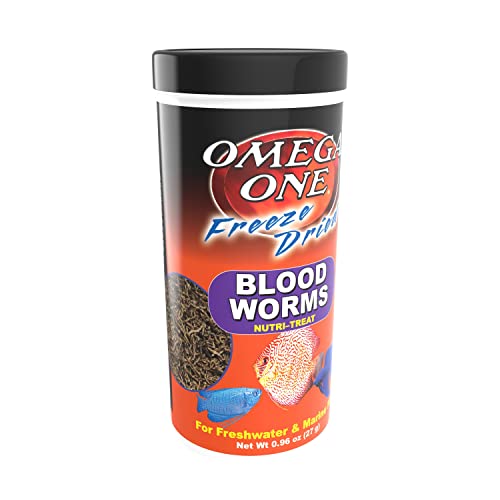

The Omega One Freeze Dried Blood Worms are a high-protein, nutrient-rich treat that helps bettas thrive. Packed with essential amino acids and natural fats, these bloodworms promote rapid growth, vibrant color, and overall vitality. Ideal for all life stages, they make a perfect supplement for bettas when learning how to feed betta fish the right way. Freeze-dried for safety and convenience, this premium food offers the nutritional benefits of live worms without the risk of parasites — ensuring clean, healthy feeding every time.
- High Protein Content: Boosts energy and supports strong fin growth and color.
- Safe & Convenient: Freeze-dried to eliminate harmful bacteria and parasites.
- Palatability: Bettas love the natural taste, making it great for picky eaters.
- Supplement Only: Should be used with pellet food for a balanced diet.
- Water Clarity: May cloud water if not pre-soaked or overfed.
- Texture: Some bettas may prefer softer, frozen alternatives.
Omega One Freeze-Dried Bloodworms are made with bloodworms as the listed ingredient.
According to the manufacturer, they contain at least 55% crude protein and 3% crude fat.
This makes them a straightforward option for aquarists who prefer treats without a lengthy ingredient list.
They’re available in different container sizes, which can be convenient for households with more than one aquarium.
What we like: Single-ingredient formula, high protein content, and simple feeding.
Considerations: Fish still require other foods to obtain a balanced nutritional profile.
Best for: Fishkeepers seeking a simple supplementary food for suitable carnivorous and omnivorous fish.
4. Aqueon Betta Treat Freeze-Dried Bloodworms — Best for Betta Fish
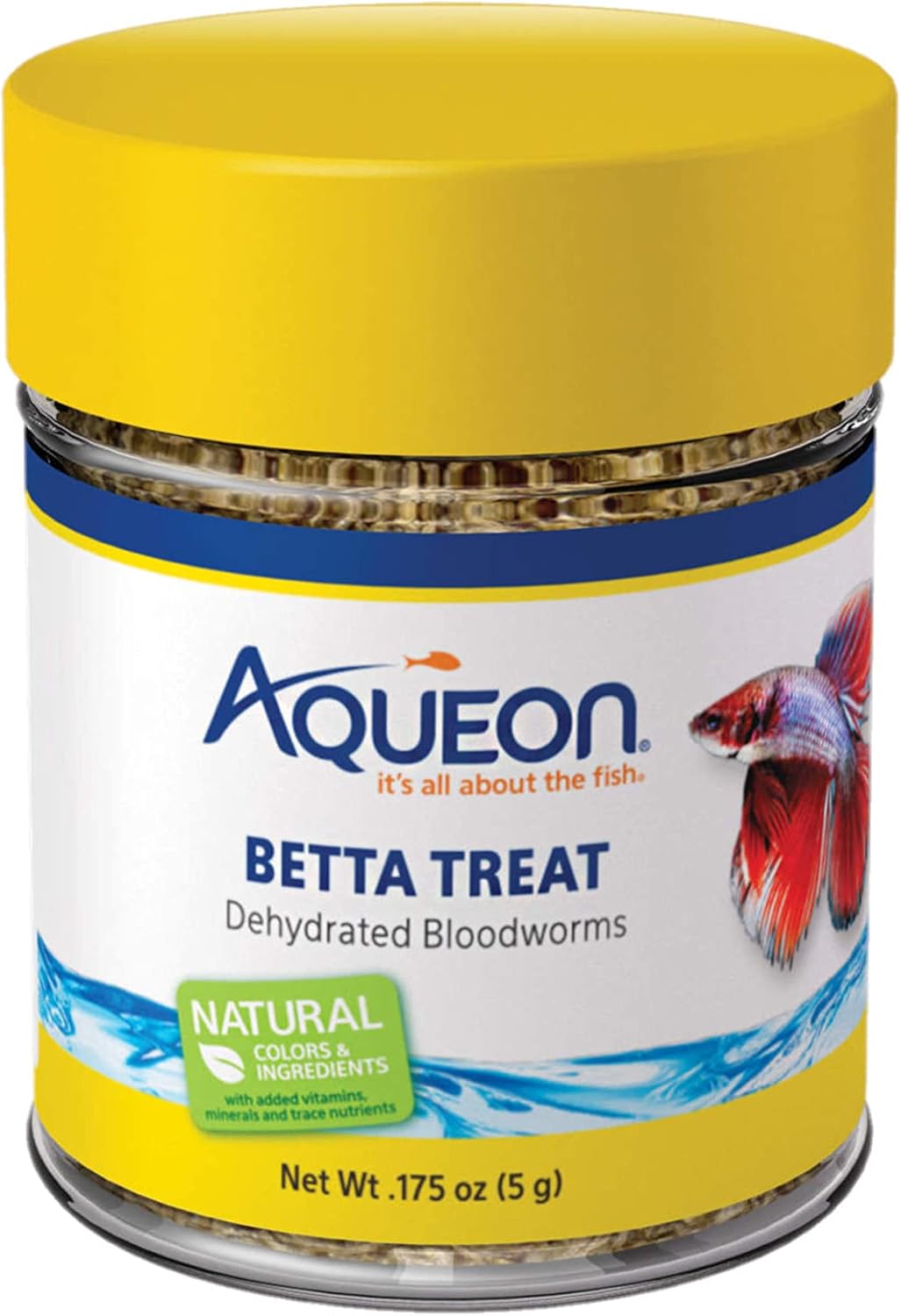


Aqueon Betta Treat Freeze-Dried Bloodworms are a protein-rich snack designed for betta fish and other suitable tropical species. These freeze-dried bloodworms add variety to regular feeding routines while encouraging natural feeding behavior. The compact 0.175 oz container is easy to store and ideal for fishkeepers with smaller aquariums.
- Protein-Rich: Provides additional protein to supplement regular fish food.
- Easy Storage: Freeze-dried formula requires no refrigeration.
- Betta-Friendly: Convenient treat designed specifically for betta fish.
- Small Quantity: The 0.175 oz container may not last long in larger aquariums.
- Requires Soaking: Must be softened in water before feeding.
- Not Complete Food: Should only supplement a balanced diet.
Aqueon Betta Treat is formulated as a supplementary food for bettas, although other suitable tropical fish may also enjoy it.
The small container is convenient for owners who maintain a single betta aquarium and don’t need a large supply.
Aqueon recommends soaking the freeze-dried bloodworms in water before feeding.
They should be offered alongside nutritionally appropriate betta pellets or another complete staple diet.
What we like: Small package, straightforward ingredients, and convenient portions for individual bettas.
Considerations: The relatively small container may be less practical for larger aquariums.
Best for: Betta owners seeking an occasional protein-rich treat.
What Are Bloodworms?
Despite their name, the bloodworms commonly sold as aquarium food aren’t true worms. They’re the aquatic larvae of non-biting midges belonging to the Chironomidae family.
These insects lay eggs in freshwater environments such as ponds, lakes, and slow-moving waterways. Their larvae live in sediment, where they feed on organic material before developing into adult midges.
Bloodworms get their distinctive red appearance from hemoglobin, an oxygen-binding protein that helps certain species survive in environments with limited dissolved oxygen.
In their natural habitats, these larvae are eaten by numerous freshwater fish.
Aquarium bloodworms shouldn’t be confused with marine bloodworms belonging to the genus Glycera. Those are completely different animals and aren’t the usual bloodworms sold for ornamental fish.
Most aquarium stores offer bloodworms in three forms: live, frozen, and freeze-dried.
Are Bloodworms Good for Fish?
Yes. Bloodworms can be a nutritious addition to the diet of many carnivorous and omnivorous aquarium fish.
Their main advantage is protein, which supports normal growth, tissue maintenance, and other essential biological functions.
For example, Hikari Bio-Pure Freeze-Dried Blood Worms contain at least 55% crude protein according to the manufacturer’s guaranteed analysis.
However, nutritional values vary depending on processing and moisture content.
Frozen bloodworms contain much more water, so their protein percentages appear considerably lower on packaging. This doesn’t automatically make them less nutritious. Comparing frozen and freeze-dried products requires accounting for their different moisture levels.
Benefits of Feeding Bloodworms
1. Support growth and body maintenance
Bloodworms provide animal protein and amino acids that contribute to normal growth and tissue repair.
2. Encourage natural feeding behavior
Live bloodworms move through the water, encouraging fish to chase and capture their food. Even frozen bloodworms can attract reluctant eaters because of their texture and scent.
3. Add variety to aquarium diets
Offering different foods helps prevent dependence on a single food source and broadens the nutritional variety available to fish.
4. Help condition certain breeding fish
Aquarists sometimes include bloodworms in conditioning diets for discus, angelfish, and other species before breeding. However, spawning success also depends on water conditions, maturity, and overall nutrition.
Bloodworms aren’t nutritionally complete. Most aquarium fish still need an appropriate staple food, along with other supplementary foods suited to their species.
Types of Bloodworms for Aquarium Fish
Understanding the differences between live, frozen, and freeze-dried bloodworms helps you choose the most suitable option.
1. Live Bloodworms
Live bloodworms offer the most natural feeding experience because they move through the water and can trigger hunting instincts.
They’re particularly useful for certain predatory species and fish that refuse prepared foods.
However, live foods can introduce unwanted microorganisms or contaminants, especially when harvested from uncontrolled environments.
Purchase live bloodworms from reputable suppliers rather than collecting them from outdoor waterways.
2. Frozen Bloodworms
Frozen bloodworms are a practical choice for many aquarium owners.
They’re typically sold in cubes or flat packs that can be divided into individual portions.
Commercial freezing and processing can reduce some contamination risks associated with live food, although no product should be assumed completely risk-free.
Thaw the required portion before feeding, and keep the remaining food properly frozen.
Their soft texture and familiar appearance make frozen bloodworms particularly useful for fish accustomed to eating aquatic invertebrates.
3. Freeze-Dried Bloodworms
Freeze-dried bloodworms are convenient because they don’t require freezer storage.
They’re lightweight, easy to measure, and can remain usable for an extended period when stored according to the manufacturer’s instructions.
However, they often float and may be difficult for bottom-feeding fish to access.
Soaking them briefly in aquarium water helps soften the food and makes it easier to distribute.
| Type | Main advantage | Main drawback |
|---|---|---|
| Live | Encourages hunting behavior | Greater contamination and handling concerns |
| Frozen | Soft texture and convenient portioning | Requires frozen storage |
| Freeze-dried | Long shelf life and easy storage | Often floats and benefits from rehydration |
For most beginners, frozen or freeze-dried bloodworms offer a convenient introduction to supplemental feeding.
Which Fish Can Eat Bloodworms?
Many freshwater aquarium fish readily accept bloodworms, although suitability depends on species, feeding behavior, and the size of the larvae.
| Fish | Suitability | Feeding considerations |
|---|---|---|
| Betta fish | Excellent occasional treat | Offer small portions |
| Tetras | Good supplemental food | Use suitably sized pieces |
| Guppies | Occasional treat | Maintain a varied omnivorous diet |
| Angelfish | Good supplemental food | Avoid excessive portions |
| Discus | Useful for dietary variety | Don’t replace complete foods |
| Gouramis | Generally suitable | Feed alongside their normal diet |
| Corydoras | Suitable occasionally | Ensure food reaches the bottom |
| Kuhli loaches | Good occasional treat | Target-feed shy individuals |
| Goldfish | Limited occasional treat | Prioritize species-appropriate balanced foods |
Fish That Need Special Consideration
Not every fish benefits equally from bloodworms.
Primarily herbivorous fish, including certain African cichlids, require diets emphasizing plant-based or other species-appropriate foods. Frequent bloodworm feeding may be unsuitable for these species.
Very small fish and newly hatched fry may also struggle with full-sized larvae. Tiny live foods, microworms, or appropriately sized baby brine shrimp may be better options.
Always research the natural diet of your particular species before introducing a new food.
How to Feed Bloodworms to Fish Safely
Proper preparation makes bloodworms easier to eat and helps prevent excess waste from accumulating in the aquarium.
Step 1: Choose the Correct Portion
Start with a small amount appropriate for your fish’s size and number.
A single betta needs only a few suitably sized bloodworms, while a larger community aquarium may require more.
An entire frozen cube is usually excessive for one small fish.
Step 2: Prepare the Bloodworms
For frozen bloodworms:
Place the required portion in a clean container and allow it to thaw in a little aquarium water. Once thawed, use a pipette or feeding tool to introduce the food gradually.
You can strain off excess thawing liquid if desired.
For freeze-dried bloodworms:
Soak a small portion in aquarium water for a few minutes until softened.
For live bloodworms:
Use a clean feeding tool and avoid introducing unnecessary transport water into the aquarium.
Step 3: Feed Slowly
Introduce a small amount and observe how quickly your fish eat it.
Avoid adding more food simply because the fish continue searching for it.
A useful starting point is to offer only what your fish can comfortably consume within one or two minutes.
Step 4: Remove Uneaten Food
Leftover bloodworms can decompose and contribute to deteriorating water quality.
Use a siphon or pipette to remove uneaten pieces, particularly those trapped beneath decorations or between plants.
Wash your hands after handling bloodworms and feeding equipment.
How Often Should You Feed Bloodworms to Fish?
For many healthy adult community fish, once or twice per week is a reasonable starting point for bloodworm treats.
Some species may benefit from more frequent supplemental frozen foods, while others should receive bloodworms only occasionally.
The ideal schedule depends on factors including:
- Species and natural dietary requirements
- Age, size, and activity level
- Nutritional composition of the staple food
- Other treats included in the diet
- Body condition and feeding response
For example, you might offer an appropriate complete pellet or flake food on most days, then substitute part of one meal with bloodworms once or twice weekly.
On other days, suitable alternatives could include brine shrimp, daphnia, or species-appropriate vegetable matter.
Avoid adding treats on top of an already excessive daily ration.
For fish with specialized dietary requirements, follow guidance specific to that species rather than relying on a general feeding schedule.
Potential Risks of Feeding Bloodworms
Bloodworms are useful aquarium foods, but a few precautions are worth understanding.
Nutritional Imbalances
Bloodworms shouldn’t form the entire diet of most ornamental fish.
A diet based exclusively on one invertebrate may lack the appropriate balance of vitamins, minerals, fatty acids, and other nutrients.
Use complete foods suited to your fish as the nutritional foundation.
Digestive Problems
Excessive feeding can contribute to digestive discomfort in some fish.
Rehydrate freeze-dried bloodworms to soften their texture, and avoid oversized portions.
Persistent bloating, abnormal swimming, or prolonged appetite loss shouldn’t automatically be blamed on bloodworms. These symptoms can have several causes and may require advice from an aquatic veterinarian.
Water Quality Problems
Uneaten food adds organic waste to the aquarium.
As it decomposes, it contributes to the biological processes that produce ammonia, placing additional demand on the filtration system.
Small portions and regular maintenance help minimize this risk.
Contamination and Allergies
Poorly sourced live bloodworms may introduce undesirable microorganisms or contaminants.
Bloodworms can also cause allergic reactions in some people handling fish food.
A published medical case report, Fishing for Allergens: Bloodworm-Induced Asthma, documents respiratory symptoms associated with bloodworm exposure.
Avoid inhaling freeze-dried food dust, minimize direct contact, and wash your hands after feeding. Anyone experiencing suspected allergic symptoms should stop exposure and seek appropriate medical advice.
How to Choose the Right Product
If convenience matters most, freeze-dried bloodworms are generally easier to store than frozen alternatives.
For fish that readily accept thawed foods, frozen bloodworms can also be an excellent choice.
Regardless of brand, look for intact packaging, clear ingredient information, an appropriate expiration date, and feeding instructions suited to your aquarium.
Alternatives to Bloodworms
Bloodworms aren’t the only way to add variety to your fish’s diet.
Depending on the species, other options include:
- Brine shrimp: A popular frozen or live food for many freshwater and marine species.
- Daphnia: Small freshwater crustaceans suitable for numerous community fish.
- Mysis shrimp: Useful for many carnivorous fish, particularly in marine aquariums.
- Blackworms: A live-food option appreciated by certain freshwater fish, provided they’re responsibly sourced.
- Complete pellets and flakes: Essential dietary foundations for many commonly kept aquarium species.
Rotating suitable foods can provide different nutrients, textures, and feeding experiences without relying too heavily on one treat.
Final Thoughts: Should You Feed Bloodworms to Your Fish?
Bloodworms can be a valuable addition to a well-planned aquarium feeding routine.
They provide protein, encourage natural feeding behavior, and offer an appealing alternative to everyday pellets or flakes.
The important thing is moderation.
Choose an appropriate form, prepare it correctly, and offer portions suited to your fish’s needs. Most importantly, maintain a balanced diet that reflects what each species naturally eats.
When used thoughtfully, bloodworms can make feeding time more engaging without compromising nutrition or aquarium water quality.
Frequently Asked Questions About Bloodworms for Fish
1. Can I feed bloodworms to my fish every day?
Bloodworms shouldn’t replace a complete daily diet. For many community aquarium fish, offering them once or twice weekly as a treat is sufficient. Some specialized carnivores have different feeding requirements, so frequency should depend on the species, age, body condition, and overall diet.
2. Are frozen bloodworms better than freeze-dried bloodworms?
Neither is automatically better in every situation. Frozen bloodworms provide a soft, moist food that many fish readily accept, while freeze-dried products are convenient and require no freezer space. Both can work well when purchased from reputable manufacturers, prepared properly, and incorporated into a balanced diet.
3. Can betta fish eat bloodworms?
Yes. Bettas are carnivorous fish that often enjoy bloodworms. Offer only a few appropriately sized worms as an occasional treat, and continue feeding a quality betta staple food. Avoid excessive portions, and monitor your betta for changes in appetite, body condition, or digestion.
4. Can bloodworms cause bloating in fish?
Overfeeding bloodworms may contribute to digestive problems in some fish. Soaking freeze-dried bloodworms before feeding can soften them and make portioning easier. However, bloating can also result from illness, inappropriate water conditions, or other dietary issues. Persistent symptoms require further investigation.
5. How long do bloodworms last?
Shelf life depends on the product and how it’s stored. Unopened freeze-dried bloodworms should be kept in a cool, dry location and used before the manufacturer’s expiration date. Frozen bloodworms must remain frozen according to package instructions. Once thawed, prepare them promptly, discard unused portions, and don’t refreeze food that has been sitting at room temperature.