How to Feed Fish While on Vacation
*We may earn a commission for purchases made using our links. Please see our disclosure to learn more.
Planning a vacation is exciting, but leaving your aquarium unattended can be a concern. Unlike dogs and cats, aquarium fish generally require less daily attention. However, they still depend on proper nutrition, stable water conditions, and functioning aquarium equipment to stay healthy.
Knowing how to feed fish while on vacation can help prevent overfeeding, hunger, poor water quality, and unnecessary stress. Whether you are leaving for a weekend, a week, or an extended trip, the best feeding method depends on the species you keep, their age, dietary requirements, and the condition of your aquarium.
From automatic fish feeders and slow-release food to asking a trusted fish sitter for help, several options can keep your fish comfortable while you are away. With a little preparation, you can enjoy your vacation without constantly worrying about your underwater pets.
“Most healthy adult fish can go 3–5 days without food without serious harm, though this varies by species, age and health status.”
— Petco, Auto Feeding Fish on Vacation
Key Takeaways
- Many healthy adult aquarium fish can tolerate a few days without food, depending on their species and health.
- Automatic fish feeders are a convenient option for vacations lasting several days or longer.
- Vacation feeding blocks should be tested beforehand to ensure they do not negatively affect water quality.
- Young, sick, and breeding fish may require more frequent feeding and specialized care.
- Overfeeding before leaving can increase waste, ammonia levels, and the risk of poor water quality.
- A trusted fish sitter is particularly valuable during extended vacations.
- Preparing your aquarium and testing feeding equipment before departure can help prevent unexpected problems.
4 Best Fish Feeders for Vacation
Investing in a suitable automatic fish feeder can make aquarium care more manageable while traveling. The following products offer different feeding features to accommodate various aquarium sizes, diets, and vacation schedules.
1. EHEIM Everyday Fish Feeder – Best Overall


The EHEIM Feed-Air Everyday Fish Feeder is a compact, programmable automatic feeder designed to maintain consistent feeding schedules for aquarium fish. Its adjustable dispensing mechanism allows for controlled food portions, while the ventilated food chamber helps prevent moisture buildup and food clumping. Suitable for freshwater and saltwater aquariums, it provides a convenient feeding solution for busy fishkeepers and those going on vacation.
- Programmable Feeding: Maintains a consistent feeding schedule.
- Adjustable Portions: Helps prevent overfeeding.
- Ventilated Chamber: Helps reduce moisture buildup and food clumping.
- Battery Dependent: Requires batteries for operation.
- Limited Food Compatibility: Suitable only for compatible dry foods.
- Initial Calibration: Requires testing to ensure accurate portions.
The EHEIM Everyday Fish Feeder is a practical choice for fishkeepers looking for a programmable feeding system. Its compact design makes it suitable for many freshwater and saltwater aquarium setups.
The adjustable food opening allows users to control portions, while its ventilated feeding chamber helps reduce moisture buildup.
Key features:
- Programmable feeding schedule
- Approximately 100 mL food capacity
- Adjustable food dispensing opening
- Ventilated food chamber
- Low-battery warning
- Manual feeding option
Best for: Community aquariums and fish that regularly consume compatible dry foods.
Potential drawback: Portion sizes require calibration before use, particularly when dispensing small pellets. EHEIM+1
2. Fish Mate F14 Automatic Aquarium Fish Feeder – Best for Portion Control


The Fish Mate F14 Aquarium Fish Feeder features a precise quartz timer that delivers one to four scheduled meals per day, with a capacity of up to 14 individual portions. Its gradual food dispensing system helps reduce overfeeding and supports consistent feeding habits. Compatible with flakes, pellets, and granules, this compact, battery-operated feeder offers flexible mounting options and is suitable for tropical and coldwater aquariums.
- Precise Portion Control: Holds up to 14 individually measured meals.
- Flexible Feeding Schedule: Dispenses one to four meals daily.
- Long Battery Life: Operates for over a year on a single AA battery.
- Limited Meal Capacity: Requires refilling after 14 meals.
- Battery Not Included: Requires a separate AA battery purchase.
- Manual Food Preparation: Each compartment must be filled individually.
The Fish Mate F14 features 14 individual food compartments instead of a traditional rotating food drum. This design allows fishkeepers to measure individual meals before leaving home.
It is particularly useful for aquariums where precise feeding portions or different types of dry food are necessary.
Key features:
- 14 individual meal compartments
- One to four scheduled meals per day
- Compatible with several types of dry fish food
- Battery-powered operation
- Individually measured food portions
Best for: Small aquariums and fishkeepers concerned about accidental overfeeding.
Potential drawback: Its capacity is limited to 14 meals, so the operating duration depends on feeding frequency. Watchmarks Aquarium+1
3. Fluval PF2 Programmable Fish Feeder – Best for Routine Feeding


The Fluval PF2 Programmable Fish Feeder is designed to provide consistent, automated feeding for aquarium fish. Featuring an 85 mL food chamber and adjustable dispensing settings, it allows fishkeepers to customize feeding portions according to their aquarium's needs. Its compact design and programmable operation make it a convenient solution for daily feeding routines, busy schedules, and vacations.
- Programmable Feeding: Provides meals at scheduled intervals.
- Adjustable Portions: Allows customized food dispensing.
- Compact Design: Fits various aquarium setups without occupying much space.
- Limited Food Capacity: The 85 mL chamber may require frequent refilling.
- Higher Price: More expensive than some automatic fish feeders.
- Initial Calibration: Requires testing to determine suitable feeding portions.
The Fluval PF2 provides a straightforward way to automate daily feeding. Its adjustable dispensing mechanism makes it suitable for aquariums where fish regularly consume flakes or pellets.
The compact design is particularly convenient for fishkeepers looking to automate feeding without installing complicated equipment.
Key features:
- 85 mL food capacity
- Programmable feeding
- Adjustable food dispensing
- Compatible with flakes and pellets
- Compact aquarium mounting design
Best for: Established freshwater aquariums with consistent daily feeding routines.
Potential drawback: Fishkeepers should confirm mounting compatibility and whether the feeding intervals meet their aquarium’s requirements. Fluval Aquatics UK+1
4. EHEIM TWINfeeder – Best for Mixed-Species Aquariums


The EHEIM TWIN Automatic Fish Feeder features two independently programmable food chambers that accommodate flakes, pellets, granules, and sticks. Its aerated chambers help keep food dry and reduce clumping, while the random feeding function simulates more natural feeding conditions. With a large digital display and included batteries, this automatic feeder provides a convenient feeding solution for mixed-species aquariums with different dietary requirements.
- Dual Food Chambers: Dispenses two different types of fish food.
- Independent Programming: Allows separate feeding schedules for each chamber.
- Aerated Compartments: Helps keep food dry and prevent clumping.
- Higher Price: More expensive than single-chamber feeders.
- Bulky Design: May occupy more space on smaller aquariums.
- Complex Setup: Requires separate programming and portion adjustments.
The EHEIM TWINfeeder features two independently programmable food chambers, allowing different types of dry food to be dispensed according to separate schedules.
This makes it particularly useful for community tanks containing fish with different dietary preferences and feeding habits.
Key features:
- Two separate food compartments
- Independently programmable feeding drums
- Ventilated food chambers
- Compatible with several dry food formats
- Low-battery warning
- Large display
Best for: Mixed-species aquariums requiring different types of food.
Potential drawback: Its larger design may be unsuitable for smaller aquarium lids or tanks with limited mounting space. EHEIM
Vacation Fish Feeder Comparison
| Product | Feeding mechanism | Best for |
|---|---|---|
| EHEIM Everyday Fish Feeder | Rotating food drum | Everyday vacation feeding |
| Fish Mate F14 | 14 individual compartments | Precise portion control |
| Fluval PF2 | Adjustable food dispenser | Consistent feeding routines |
| EHEIM TWINfeeder | Dual food chambers | Mixed-species aquariums |
Regardless of which feeder you choose, test its performance using your fish’s regular food before relying on it during a vacation.
How Long Can Fish Go Without Food?
Many healthy adult aquarium fish can go three to five days without food. Some species may tolerate longer periods, but their ability to do so depends on their metabolism, age, diet, body condition, and environmental conditions.
Unlike mammals, fish are ectothermic animals, meaning their metabolic rate is influenced by the temperature of their surroundings. Fish living in warmer water may use energy more quickly than those kept at cooler temperatures.
However, surviving without food is not the same as receiving appropriate care. Extended fasting should not become a routine feeding practice.
Recommended Feeding Arrangements by Vacation Length
| Vacation length | Recommended feeding method |
|---|---|
| 1–2 days | Normal feeding before departure; many healthy adults need no additional meals |
| 3–4 days | Short fasting period for suitable adult fish or a tested automatic feeder |
| 5–7 days | Automatic fish feeder or trusted fish sitter |
| 8–14 days | Automatic feeder with regular aquarium checks |
| More than 14 days | Experienced fish sitter and scheduled aquarium maintenance |
These recommendations apply primarily to healthy adult fish living in established aquariums. Fish fry, juveniles, specialized feeders, and fish recovering from illness may need more frequent attention.
4 Safe Ways to Feed Fish While on Vacation
Choosing the right vacation feeding method can make a significant difference in your fish’s health and aquarium stability.
1. Use an Automatic Fish Feeder
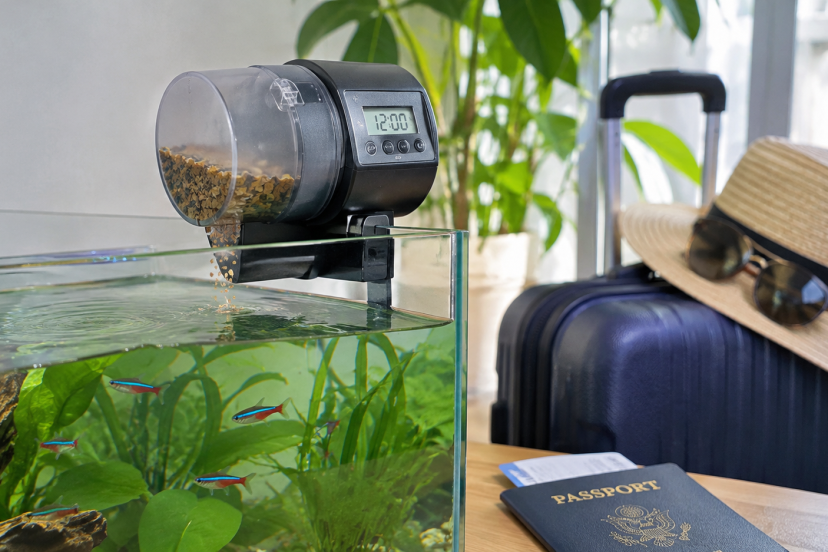
An automatic fish feeder is one of the most convenient ways to maintain a consistent feeding schedule while traveling. These devices attach to the aquarium and dispense predetermined portions of dry food at scheduled intervals.
Most automatic feeders work with flakes, pellets, or granules, making them suitable for many freshwater and saltwater fish.
Automatic feeders are particularly useful for aquariums containing multiple fish that require regular meals.
When selecting an automatic feeder, look for adjustable portion sizes, programmable feeding schedules, secure mounting options, and protection against moisture.
Test the device for at least several days, preferably a week, before leaving. Observe each feeding cycle to ensure the feeder releases an appropriate amount of food and that your fish can access it.
Humidity can cause dry food to clump inside the feeding chamber, so position the device away from excessive splashing and condensation.
2. Ask a Trusted Fish Sitter
Having a friend, family member, neighbor, or professional aquarium sitter look after your fish provides an additional level of protection.
Unlike automatic feeders, a fish sitter can identify problems such as unusual fish behavior, equipment failure, water leaks, or cloudy water.
Prepare individual food portions in small containers labeled with the appropriate feeding dates. This prevents someone unfamiliar with fishkeeping from accidentally adding too much food.
Provide written instructions covering feeding times, aquarium lighting, equipment checks, emergency contacts, and any species-specific requirements.
For longer vacations or aquariums containing sensitive species, an experienced fish sitter is often the safest choice.
3. Use Vacation Fish Food Blocks
Vacation fish food blocks are designed to gradually release food into aquarium water over several days. They are available in different formulas and durations, including weekend and week-long feeding options.
These products can be convenient for fishkeepers who do not want to install electronic feeding equipment.
However, not all fish readily accept vacation blocks. Uneaten food and dissolving ingredients may also affect water quality, particularly in smaller or heavily stocked aquariums.
Introduce the product before your vacation and monitor your fish’s feeding response, water clarity, and water parameters.
Avoid relying on untested feeding blocks immediately before leaving home.
4. Allow Healthy Adult Fish to Skip Meals During Short Trips
If you are leaving for a weekend, your fish may not need a special feeding arrangement.
Many healthy adult aquarium fish can tolerate a brief interruption in their feeding schedule. In suitable aquariums, skipping a meal or two may be less risky than introducing an unfamiliar feeding product.
This approach is most appropriate for healthy, well-established adult fish with no special dietary requirements.
It is not recommended for fish fry, underweight fish, sick fish, or species that require frequent feeding.
Continue feeding your fish normally before departure rather than increasing their portions to compensate for missed meals.
Vacation Feeding Requirements for Different Fish Species
Not all aquarium fish have the same nutritional needs. Understanding the feeding requirements of your fish can help you choose an appropriate vacation care plan.
| Fish species | Vacation feeding considerations |
|---|---|
| Betta fish | Small, measured portions of suitable pellets |
| Goldfish | Controlled portions and close attention to water quality |
| Guppies | Small, regular meals, especially for juveniles |
| Neon tetras | Small flakes or appropriately sized micro pellets |
| Angelfish | Species-appropriate food dispensed on a consistent schedule |
| Cory catfish | Sinking food that reaches the aquarium bottom |
| Plecos | Species-appropriate sinking food, wafers, or other dietary requirements |
| Discus | Experienced care, particularly for growing fish |
| African cichlids | Food appropriate to the specific species’ diet |
| Saltwater fish | Individual feeding plans based on dietary requirements |
| Fish fry | Frequent feeding and regular supervision |
Bottom-dwelling fish deserve particular attention because food released by automatic feeders may be consumed by faster-swimming tank mates before reaching the substrate.
Similarly, fish that primarily consume frozen, fresh, or live foods may require a knowledgeable sitter instead of a conventional automatic feeder.
How to Set Up an Automatic Fish Feeder Before Vacation
Installing an automatic feeder correctly is just as important as choosing the right model.
Choose Suitable Fish Food
Use food your fish already recognize and consume regularly. Switching to unfamiliar pellets or flakes immediately before leaving may cause feeding problems.
Check that the food size is compatible with the dispensing mechanism. Large flakes may become trapped, while very small granules may fall out too quickly.
Adjust the Feeding Portions
Start with a small dispensing opening and gradually adjust it until the appropriate amount of food is released.
Test several feeding cycles over a clean container before mounting the feeder above the aquarium. This helps determine whether the portions are consistent without adding unnecessary food to the tank.
Program the Feeding Schedule
Follow your fish’s established feeding routine rather than introducing additional meals.
Feeding frequency should reflect the species, age, and dietary requirements of your aquarium inhabitants.
Install Fresh Batteries
For battery-operated feeders, install fresh batteries before departure and check that the device operates correctly.
Rechargeable feeders should be fully charged according to the manufacturer’s instructions.
Test the Feeder for Several Days
Observe how the feeder operates under normal aquarium conditions. Check for moisture buildup, inconsistent portions, food blockages, and mounting problems.
A successful test provides greater confidence that the feeder will perform as intended during your absence.
How to Prepare Your Fish Tank Before Going on Vacation
Feeding is only one aspect of vacation aquarium care. Water quality, temperature, filtration, and oxygen levels are equally important.
Perform a Partial Water Change
Complete your usual partial water change a few days before leaving.
Avoid unusually large water changes immediately before departure, as sudden changes in water chemistry may stress aquarium inhabitants.
Check Aquarium Water Parameters
Test ammonia, nitrite, nitrate, pH, and water temperature before leaving.
Ammonia and nitrite should be undetectable in an established aquarium. Nitrate, pH, and temperature should remain within suitable ranges for the species you keep.
Inspect Aquarium Equipment
Make sure the filter, heater, air pump, lighting system, and automatic feeder are functioning properly.
Avoid replacing established biological filter media or introducing major equipment changes immediately before traveling.
Set Aquarium Lights on a Timer
An aquarium light timer helps maintain a consistent day and night cycle.
Leaving aquarium lights on continuously can encourage excessive algae growth and disrupt normal fish behavior.
Account for Water Evaporation
Check the aquarium water level before departure. Open-top aquariums and saltwater tanks may experience significant evaporation during longer vacations.
An automatic top-off system or trained fish sitter can help maintain appropriate water levels. Saltwater aquarium evaporation should generally be replaced with suitable freshwater rather than additional saltwater.
Pre-Vacation Aquarium Checklist
Aquarium vacation preparation
0 of 10 completedPerform a routine partial water change.Test aquarium water parameters.Inspect the filter, heater, and air pump.Check all aquarium inhabitants for signs of illness.Test the automatic fish feeder.Install fresh batteries or charge the feeder.Prepare individual food portions for the fish sitter.Set aquarium lighting on a timer.Check the water level and evaporation plan.Leave written emergency contact information.
Common Mistakes When Feeding Fish During Vacation
Even experienced fishkeepers can make mistakes when preparing their aquariums for an extended absence.
Overfeeding Before Leaving
Fish cannot safely store unlimited amounts of food for future use. Excessive feeding increases waste production and may contribute to deteriorating water quality.
Maintain normal feeding portions instead of providing extra meals before departure.
Using an Untested Feeding Block
Slow-release food blocks may dissolve differently depending on the aquarium’s conditions.
Testing the product beforehand helps determine whether your fish accept it and whether it affects water quality.
Turning Off the Aquarium Filter
Aquarium filters should continue operating while you are away. Filtration supports beneficial bacteria, water circulation, and oxygen exchange.
Turning off the filter can compromise water quality and threaten fish health.
Leaving Without Backup Care
Automatic feeders can malfunction, batteries can run out, and electrical outages can interrupt essential equipment.
Arrange for someone to inspect your aquarium periodically, especially during longer trips.
Adding New Fish Before Traveling
New fish may introduce illness, increase the aquarium’s biological load, or disrupt established social behavior.
Wait until you return and can properly supervise new aquarium inhabitants.
How to Feed Fish During a Two-Week or Longer Vacation
Extended vacations require more comprehensive planning than weekend trips. An automatic feeder alone cannot address equipment failures, evaporation, illness, or declining water quality.
Arrange for a reliable person to visit your aquarium regularly. Depending on the setup, visits every two to three days may be appropriate, while sensitive aquariums may require daily supervision.
Provide enough pre-measured food for the entire vacation, along with supplies for routine maintenance.
For heavily stocked aquariums, reef tanks, or fish requiring specialized diets, consider hiring a professional aquarium maintenance service.
Combining automated feeding with human supervision provides additional protection against unexpected problems.
What to Do When You Return From Vacation
Once you return home, inspect your aquarium before resuming normal feeding.
Observe your fish for unusual swimming patterns, reduced appetite, breathing difficulties, or visible signs of stress. Check the water temperature, water level, and equipment performance.
Test the water parameters and remove any uneaten food or accumulated debris.
If necessary, perform an appropriate partial water change and gradually resume your regular feeding schedule. Avoid compensating for missed meals by providing excessive food.
Fish showing persistent signs of illness should be evaluated by a veterinarian experienced in aquatic animals.
Final Thoughts
Knowing how to feed fish while on vacation starts with understanding your aquarium’s unique needs. Short trips may require minimal feeding adjustments, while longer vacations benefit from automatic feeders, reliable fish sitters, and regular aquarium inspections.
Choosing suitable feeding equipment, maintaining stable water conditions, and preparing your aquarium in advance can reduce avoidable risks. With the right arrangements in place, your fish can remain healthy and comfortable while you enjoy your time away.
Frequently Asked Questions
1. Can fish survive a week without food?
Some healthy adult aquarium fish can tolerate a week without food, but this varies considerably by species, age, metabolism, and health. For a week-long vacation, a tested automatic feeder or trusted fish sitter is generally a more dependable option.
2. How can I feed my fish while on vacation without an automatic feeder?
Ask a trusted friend or family member to provide pre-measured meals. A suitable, previously tested vacation feeding block may also work for certain aquariums. Healthy adult fish with appropriate dietary requirements may be able to skip meals during a short weekend trip.
3. Are vacation fish food blocks safe?
Vacation feeding blocks can be suitable for some aquariums, but uneaten food and dissolving ingredients may affect water quality. Select a product appropriate for your fish and aquarium size, and test it before traveling.
4. How often should an automatic fish feeder dispense food?
An automatic feeder should generally follow your fish’s normal feeding routine. Once or twice daily may be appropriate for many adult aquarium fish, but juveniles and specialized feeders may require different arrangements. Portion sizes should also be tested carefully.
5. Should I leave my aquarium filter and heater on while on vacation?
Yes. Keep the aquarium filter running and maintain heating where required by your fish species. These systems help preserve water circulation, biological filtration, and stable temperatures. Aquarium lighting can be controlled using a timer.