Rimless Aquarium Guide: Benefits, Drawbacks, Setup, and 4 Best Tanks
*We may earn a commission for purchases made using our links. Please see our disclosure to learn more.
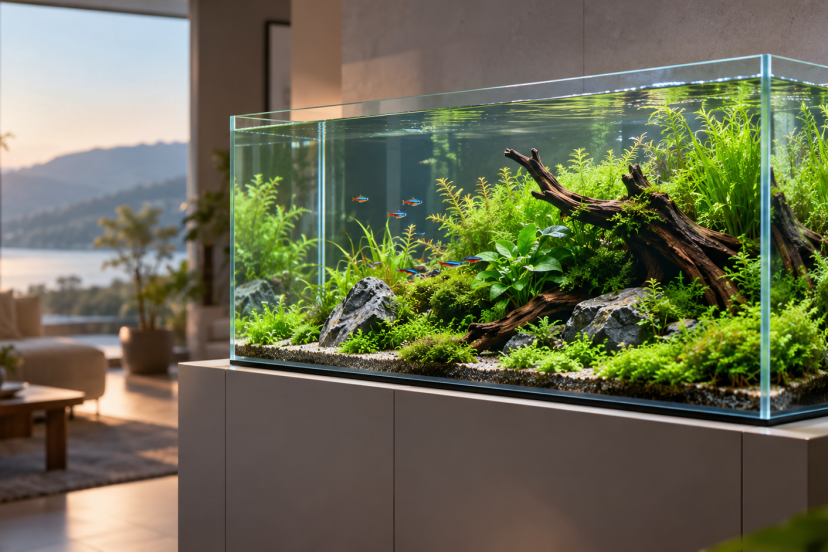
A rimless aquarium offers a clean, modern way to display fish, aquatic plants, and underwater landscapes. Without the thick plastic borders found on traditional fish tanks, the glass creates a nearly uninterrupted view of the aquarium’s interior.
This minimalist design has become especially popular among aquascaping enthusiasts who want their plants, driftwood, and decorative rocks to take center stage. Rimless tanks also work beautifully as freshwater community aquariums, shrimp habitats, and carefully planned reef displays.
However, appearance is only one consideration. A rimless aquarium requires proper support, suitable equipment, and attention to details such as evaporation, exposed glass edges, and jumping fish.
Understanding these requirements can help you decide whether a rimless tank is the right choice and which features matter most when selecting one.
“Anything blocking the aquascape is unnecessary.”
— Takashi Amano, aquascaping pioneer and founder of Aqua Design Amano.
Key Takeaways
Everything you need to know about rimless aquariums.
- Rimless aquariums eliminate bulky plastic frames, creating an unobstructed view of fish, plants, and decorations.
- Low-iron glass reduces the greenish tint of standard glass, offering clearer views and more natural colors.
- Ideal for aquascaping, rimless tanks highlight aquatic plants, driftwood, rocks, and natural underwater layouts.
- Open-top tanks experience more evaporation and may require a secure lid to prevent fish from jumping.
- Proper support is essential. Use a sturdy, level aquarium stand and follow the manufacturer’s mat requirements.
- Additional equipment such as filters, heaters, lighting, and lids may need to be purchased separately.
- Tank size matters. Choose aquarium dimensions based on your fish’s adult size, behavior, and space requirements.
- Regular maintenance includes monitoring water quality, replacing evaporated water, and cleaning glass.
Four Recommended Rimless Aquariums
The following models offer different sizes and configurations for planted aquariums, shrimp tanks, and decorative displays.
1. LANDEN 60P 16-Gallon Rimless Aquarium — Best Overall for Aquascaping


The LANDEN Rimless Glass Aquarium, with its minimalist design, offers a captivating 16-gallon tank suitable for various aquatic scenes. Crafted from 6mm heavy-duty glass, this aquarium boasts high light transmittance and low iron for exceptional clarity and an immersive viewing experience. With its bezel-less design and wide vision perspective, it provides a rich landscape aquascape that enhances any indoor setting. Manufactured to high standards, it features right-angle construction, precise sizing, mirror edge grinding, and uniform joint glue for a smooth, quality feel. The tank's dimensions of 23.6" L × 11.8" W × 14.2" H (60cm x 30cm x 36cm) offer ample space for aquascaping creativity.
- Immersive Viewing: Ultra-white, high-transparency glass provides an immersive viewing experience for aquatic landscapes.
- Rimless Design: Bezel-less construction and wide vision perspective enhance the tank's aesthetics and provide a clean, modern appearance.
- Quality Manufacturing: Crafted to high standards with precise sizing, mirror edge grinding, and uniform joint glue, ensuring a smooth and polished finish.
- Limited Volume: At approximately 16 gallons, it may be restrictive for larger aquatic environments or specific species that require more space.
- Weight Consideration: The aquarium's weight, particularly during transportation, might require additional care due to its substantial nature.
- Specific Design Preference: The minimalist, rimless style may not suit all aquarists' aesthetic preferences or compatibility with certain setups.
The LANDEN 60P combines low-iron glass with a practical rectangular footprint, making it a versatile option for freshwater aquascaping.
Its 23.6-inch length provides room for carefully arranged rocks, driftwood, and aquatic plants without requiring the space of a large aquarium.
Key features:
- Approximately 16-gallon capacity
- Dimensions: 23.6 × 11.8 × 14.2 inches
- 6 mm low-iron glass
- Precision-finished glass edges
- Included foam leveling mat
The rectangular shape supports a range of layouts, including planted community aquariums and nature-inspired aquascapes.
Its main limitation is that lighting, filtration, and a suitable lid must generally be sourced separately.
Best for: Fishkeepers seeking a balanced combination of display space, clear glass, and aquascaping flexibility.
2. FZONE 9-Gallon Shallow Rimless Aquarium — Best for Shallow Aquascapes


The FZONE 9-Gallon Shallow Aquarium combines a minimalist design with high-quality NovaClear Ultra-White Glass for an unobstructed view of your aquatic environment. Its low-iron glass offers 91.5% light transmittance, reducing the greenish tint commonly found in standard aquariums.
- Clear Glass: 91.5% light transmittance for excellent visibility.
- Seamless Design: 45-degree mitered edges create a clean appearance.
- Aquascaping-Friendly: Shallow design offers easy access for plant maintenance.
- Limited Height: Not suitable for tall plants or larger fish.
- Open Top: Increased evaporation and risk of fish jumping.
- Separate Equipment: Lighting, filtration, and a lid are not included.
The FZONE 9-Gallon Shallow Rimless Aquarium offers a distinctive low-profile design that emphasizes horizontal space.
Its shallow construction makes it particularly attractive for planted layouts featuring rocks, driftwood, mosses, and low-growing aquatic plants.
Key features:
- Approximately 9-gallon capacity
- Dimensions: 23.6 × 14.2 × 6.3 inches
- 6 mm NovaClear low-iron glass
- 45-degree mitered glass edges
- Included foam leveling mat
The reduced height makes reaching the substrate and trimming plants relatively convenient.
However, the shallow water column limits stocking options. Tall-growing plants, larger fish, and species prone to jumping may be unsuitable without careful planning.
Finding a compatible lid can also be more challenging because of its unusual proportions.
Best for: Aquascapers interested in low-profile planted tanks and carefully selected small aquatic species.
3. LYPHARD AQUARIUMS 9.5-Gallon Rimless Aquarium — Best Compact Display


The LYPHARD AQUARIUMS 9.5-Gallon Rimless Aquarium features a minimalist design with ultra-clear, low-iron glass that offers 91.5% light transmittance. Its frameless construction provides an unobstructed view of fish, aquatic plants, and decorations, making it an attractive choice for small freshwater aquariums.
- Ultra-Clear Glass: 91.5% light transmittance enhances visibility.
- Durable Construction: Polished 5 mm glass with strong silicone bonding.
- Compact Design: Suitable for betta fish, shrimp, and planted tanks.
- Limited Capacity: Small size restricts fish stocking options.
- Open-Top Design: Requires a lid to prevent jumping fish.
- Equipment Not Included: Filter, lighting, and heater must be purchased separately.
The LYPHARD 9.5-Gallon Rimless Aquarium provides a compact option for fishkeepers who want clear glass without committing to a larger installation.
Its near-cube proportions work well with small driftwood arrangements, aquatic plants, and thoughtfully planned nano setups.
Key features:
- 9.5-gallon capacity
- Dimensions: 15.7 × 11.8 × 11.8 inches
- 5 mm low-iron glass
- Polished glass surfaces
- Included EVA foam leveling mat
The compact footprint makes this model suitable for smaller living spaces, provided the furniture can safely support the filled aquarium.
It can accommodate a properly equipped betta setup or a shrimp-focused aquarium. Stocking must still reflect the species’ specific needs.
A compatible lid and essential equipment are additional considerations.
Best for: Fishkeepers wanting a relatively compact rimless display with low-iron glass.
4. Allcolor 21-Gallon Rimless Aquarium — Best Larger Tank With a Glass Canopy


The Allcolor 21-Gallon Rimless Aquarium combines premium low-iron glass with a sleek, frameless design for a clear and uninterrupted view of aquatic life. Its exhibition-grade glass minimizes the greenish tint of conventional aquariums, allowing fish, plants, and aquascaping details to appear more vibrant and natural.
- Premium Clarity: Low-iron glass provides excellent visibility and natural colors.
- Durable Construction: Strong silicone bonding and polished glass edges.
- Included Accessories: Comes with a glass canopy and protective cushioning mat.
- Higher Price: More expensive than many similarly sized framed aquariums.
- Heavy Construction: Requires a sturdy, level aquarium stand.
- Separate Equipment: Filter, heater, and lighting are not included.
The Allcolor 21-Gallon Rimless Aquarium offers more interior space for aquascaping and fishkeeping while retaining the clean appearance associated with frameless tanks.
One notable advantage is its matching glass canopy, which helps reduce evaporation and provides a physical barrier against jumping.
Key features:
- Approximately 21-gallon capacity
- Dimensions: 23.62 × 13.78 × 14.96 inches
- 6 mm low-iron glass
- Glass canopy included
- Protective base mat
Its wider footprint accommodates more elaborate planting arrangements than many compact nano aquariums.
The included canopy also reduces the need to search for a separate cover, although its clips and fit should be checked carefully.
Because this tank is comparatively large and heavy, a strong, level stand and careful handling are essential.
Best for: Fishkeepers looking for a moderately sized rimless display with an included glass cover.
What Is a Rimless Aquarium?
A rimless aquarium is a glass fish tank constructed without the conventional plastic frame surrounding its upper edges. Many models also eliminate the bottom frame, allowing the glass panels to form a simple rectangular or cube-shaped structure.
Instead of relying on a conventional upper plastic frame, fully rimless aquariums use glass panels and silicone joints engineered to withstand water pressure.
The absence of bulky trim gives the aquarium a more open appearance. When combined with clear glass and thoughtfully arranged plants, the boundaries between the tank and its surroundings become less noticeable.
Rimless aquariums come in various sizes, from small desktop tanks to large custom-built displays. They can accommodate freshwater or saltwater environments when designed and equipped for the intended application.
Some products marketed as rimless have an exposed upper edge but retain a supporting bottom frame. These differ from fully frameless models, so checking the construction details is important.
Rimless Aquarium vs. Traditional Aquarium
Both aquarium styles can provide healthy environments for fish, but their construction and appearance differ.
| Feature | Rimless Aquarium | Traditional Framed Aquarium |
|---|---|---|
| Appearance | Minimalist, exposed glass edges | Visible plastic frame |
| Viewing experience | Less visual obstruction | Frame defines the viewing area |
| Glass | Often low-iron glass | Often standard glass |
| Structural support | Engineered glass and silicone construction | Frame may provide additional support |
| Lid | Frequently sold separately | Often included with aquarium kits |
| Price | Generally more expensive | Often more affordable |
| Maintenance | Exposed waterline and glass edges need attention | Frame can conceal the waterline |
Neither design is automatically better for fish health. Water quality, suitable filtration, proper stocking, and regular maintenance matter far more than the aquarium’s appearance.
Benefits of a Rimless Aquarium
Unobstructed viewing experience
The main attraction of a rimless aquarium is its uninterrupted appearance.
Without thick black borders, attention naturally shifts toward the fish, plants, and aquascaping arrangement. This creates an attractive display in living rooms, offices, and other spaces where the aquarium serves as a focal point.
The difference becomes particularly noticeable when viewing an aquascape from multiple angles.
Excellent visibility with low-iron glass
Many rimless tanks use low-iron glass, which contains less iron than conventional glass.
Standard aquarium glass can have a greenish tint, particularly around thicker edges. Low-iron glass reduces this coloration, helping plants, substrate, and fish appear closer to their natural colors.
Not every rimless aquarium uses low-iron glass, so the glass specification should be checked before purchasing.
Flexible aquascaping options
The open design complements many aquarium layouts, including heavily planted tanks, minimalist rock arrangements, and driftwood-centered displays.
Aquatic plants can also extend above the water in suitable open-top arrangements, creating a transition between submerged and emerged growth.
Rimless tanks work especially well with discreet equipment such as compact lighting fixtures, glass filter pipes, and carefully positioned heaters.
Easier access during maintenance
Without an upper frame obstructing access, trimming plants, repositioning decorations, and cleaning glass can be more convenient.
This benefit is particularly useful in shallow aquariums, where the bottom is easily reached without working around a fixed hood.
Disadvantages of Rimless Aquariums
Higher initial cost
Rimless aquariums often cost more than similarly sized framed tanks because of their glass quality, precision finishing, and construction requirements.
Lighting, filtration, stands, and lids may also need to be purchased separately.
Compare the complete setup cost rather than judging an aquarium by its tank-only price.
Greater evaporation from open tops
An uncovered aquarium continuously loses water through evaporation.
Water loss becomes more noticeable in warm, dry rooms or when fans and strong surface movement increase evaporation.
As water evaporates, dissolved minerals remain behind. In freshwater aquariums, replace evaporated water appropriately and continue regular water changes. Saltwater aquariums require particular attention because evaporation raises salinity.
Risk of jumping fish
Certain fish can jump out of uncovered aquariums, especially when startled, stressed, or exposed to unsuitable conditions.
A properly fitted aquarium-safe lid is the most reliable way to address this risk.
Lowering the waterline may offer additional protection but should not replace a secure cover for species known to jump.
Exposed glass edges
Rimless tanks depend on well-made glass panels and silicone seams. Their exposed corners are also vulnerable to impact damage.
Handle the aquarium carefully, avoid striking its edges, and follow the manufacturer’s support requirements.
Choosing the Best Rimless Aquarium
Aquarium size and dimensions
Choose a tank based on the species you intend to keep, not simply the space available on a shelf.
Small tanks are attractive and relatively compact, but changes in water temperature and chemistry can occur quickly.
Larger tanks provide more water volume, although they require stronger furniture, additional equipment, and more space.
Consider the aquarium’s footprint as well as its capacity. A long tank can offer more horizontal swimming space than a tall tank holding a similar volume.
Glass thickness and construction
Glass thickness must be appropriate for the aquarium’s height, dimensions, and structural design.
Taller tanks exert greater water pressure toward the bottom, making proper engineering essential.
There is no single safe glass thickness for every rimless aquarium. Select a purpose-built tank from a reputable manufacturer rather than attempting to judge structural safety from thickness alone.
Inspect the silicone seams for consistency and check every panel for damage before filling the aquarium.
Low-iron glass quality
Low-iron glass is particularly appealing when visual clarity is a priority.
However, it does not automatically make an aquarium stronger than one built with conventional glass.
Construction quality, panel thickness, silicone bonding, and the manufacturer’s specifications remain essential.
Stand and leveling mat
A filled aquarium is extremely heavy. Water alone weighs approximately 8.34 pounds per U.S. gallon.
A 20-gallon aquarium therefore contains about 167 pounds of water before accounting for the glass, substrate, rocks, equipment, and other materials.
Use a stable stand rated for the complete setup weight.
Many fully rimless aquariums require continuous bottom support and a manufacturer-approved foam mat. A mat helps protect the glass from minor surface imperfections, but it cannot correct a warped or uneven stand.
Always follow the specific aquarium manufacturer’s installation instructions.
Setting Up a Rimless Aquarium
Step 1: Prepare a suitable location
Choose a stable location away from direct sunlight, excessive heat, and heavy foot traffic.
Check that the stand is level in every direction and capable of supporting the completed aquarium.
Install the recommended leveling mat according to the manufacturer’s instructions.
Step 2: Inspect and test the aquarium
Before adding substrate, examine all glass panels, corners, and silicone seams.
Perform a leak test in a suitable, safe location following the manufacturer’s guidance. Do not use a tank with chipped structural edges, cracked glass, or questionable seams.
Step 3: Add substrate and decorations
Select aquarium-safe sand, gravel, or planted-tank substrate based on your intended setup.
Arrange rocks and driftwood before filling the tank. Ensure heavy decorations are stable and cannot fall against the glass.
Use a plate or suitable barrier while adding water to minimize substrate disturbance.
Step 4: Install equipment
Most setups require a filter, lighting, and a heater if the selected species need temperature control.
Choose equipment appropriate for the aquarium’s actual water volume and livestock.
Use electrical drip loops and follow the equipment manufacturer’s safety instructions.
Step 5: Establish the nitrogen cycle
Before introducing fish, allow the aquarium to develop sufficient beneficial bacteria to process ammonia and nitrite.
A fishless cycling method lets this process occur without exposing fish to potentially toxic nitrogen waste.
Use an aquarium test kit to monitor progress. Introduce livestock only after the biological filtration is established and appropriate water conditions have been confirmed.
Rimless Aquarium Maintenance
Rimless aquariums need the same basic biological care as traditional tanks, with additional attention to the exposed waterline and open glass edges.
Control algae and mineral deposits
Clean the glass with aquarium-safe tools and avoid abrasive materials that could scratch it.
Wipe mineral buildup from the exposed upper edges using an appropriate aquarium-safe cleaning method. Avoid allowing household cleaners to enter the water.
Manage evaporation
Check the waterline regularly, especially in uncovered or shallow aquariums.
Replace evaporated water as needed while monitoring water chemistry. A suitable lid can slow evaporation significantly.
Perform regular water changes
Water changes help remove accumulated waste and maintain stable conditions.
The appropriate frequency depends on stocking levels, feeding, filtration, plants, and test results.
Use conditioned replacement water with suitable temperature and chemistry.
Inspect equipment and seams
Check the filter, lighting fixtures, lid supports, and stand periodically.
Watch for developing leaks, damaged glass, unusual seam changes, or shifting support surfaces. Address potential structural problems promptly rather than continuing to operate a questionable tank.
Common Mistakes to Avoid
- Choosing appearance over appropriate size. A beautiful aquarium still needs enough space for its inhabitants. Research adult fish size, behavior, and environmental requirements before purchasing.
- Using unsuitable furniture. Ordinary desks and shelves may not support the total weight of a filled aquarium.
- Ignoring lid requirements. Open-top aquariums can present jumping risks, even when the fish have otherwise suitable conditions.
- Adding too many fish immediately. A newly established biological filter may be unable to handle a sudden increase in waste production.
- Overlooking equipment compatibility. Some clip-on lights, filters, and cover brackets may not fit thick or unusually shaped glass panels.
Avoiding these mistakes helps protect both the aquarium’s structural integrity and the health of its inhabitants.
Choosing a Rimless Aquarium That Lasts
A rimless aquarium can transform an ordinary fish tank into an attractive underwater display. Its minimal appearance highlights the movement of fish, the textures of aquatic plants, and the structure of a carefully planned aquascape.
However, the best purchase is not necessarily the largest or clearest model. It is the aquarium that offers appropriate dimensions, reliable construction, suitable support, and enough room for the species you intend to keep.
With compatible equipment, proper cycling, regular maintenance, and careful handling, a rimless aquarium can provide an appealing home for aquatic life while becoming a distinctive part of your living space.
Frequently Asked Questions
1. Are rimless aquariums safe?
Yes. A properly manufactured rimless aquarium can safely contain water when installed and maintained according to its design specifications. Its structural safety depends on factors such as glass thickness, aquarium dimensions, silicone bonding, and adequate support. Use an appropriate stand, follow the manufacturer’s instructions, and avoid aquariums with damaged glass or compromised seams.
2. Do rimless aquariums need a lid?
Not every setup requires a lid, but a suitable cover is strongly recommended when keeping fish that may jump. Lids also help control evaporation and reduce the possibility of objects entering the aquarium. For open-top setups, choose livestock carefully and consider the surrounding environment, including pets and household activity.
3. Are rimless aquariums more expensive than regular fish tanks?
Rimless aquariums are often more expensive than comparable framed tanks, particularly when they use premium low-iron glass. Additional costs may include a specialized stand, lighting, filtration, and a fitted lid. Comparing complete setups provides a more realistic picture of the total investment.
4. Can betta fish live in a rimless aquarium?
Yes. Betta fish can thrive in a properly sized and maintained rimless aquarium with suitable filtration, stable water temperature, and adequate swimming space. However, bettas can jump, so a secure lid is recommended. The tank should also include appropriate resting areas, gentle water movement, and an established biological filter.
5. Can a rimless aquarium be used for saltwater fish?
Yes. Rimless aquariums can support marine fish and reef systems when the tank is rated for saltwater use and equipped appropriately. Marine setups generally require careful management of salinity, filtration, circulation, and evaporation. An automatic top-off system can be particularly useful because evaporation changes the salinity of an uncovered marine aquarium.