Brown Algae in Fish Tank: Causes, Removal, and Prevention
*We may earn a commission for purchases made using our links. Please see our disclosure to learn more.
A dusty brown coating across aquarium glass, gravel, rocks, decorations, or plant leaves can make an otherwise healthy fish tank look neglected almost overnight. Fortunately, brown algae in a fish tank is usually easier to manage than its appearance suggests.
What fishkeepers commonly call brown algae is usually a growth of diatoms, microscopic organisms that frequently appear in newly established freshwater and saltwater aquariums. Diatoms use dissolved silica to form their cell walls and can spread rapidly when silicates, nutrients, light, and suitable surfaces are available. They are particularly common while a new aquarium’s biological system is still becoming established.
A small amount of brown algae is generally more of a cosmetic concern than an immediate danger to fish. However, a persistent or heavy coating can indicate that something in the aquarium deserves attention, especially when the tank has been established for some time.
“It’s not dangerous to fish but can turn your beautiful aquarium into an ugly mess.”
— WebMD, Brown Algae in Fish Tank
Key Takeaways
- Brown algae in fish tanks is usually made up of diatoms, which commonly form a soft brown or tan coating on aquarium surfaces.
- Diatoms are especially common in new aquariums while the biological system and nitrogen cycle are becoming established.
- Silicates, accumulated organic waste, phosphates, nitrates, and weak competition from plants can contribute to persistent growth.
- Brown algae usually wipes away more easily than hard green algae and can be removed from glass, decorations, plants, and substrate manually.
- Regular water changes, controlled feeding, appropriate filtration, substrate cleaning, and stable aquarium conditions help prevent recurring outbreaks.
- Persistent brown algae in an established tank should prompt testing and investigation rather than repeated cleaning alone.
4 Useful Products for Managing Brown Algae
Products work best when they support good aquarium husbandry rather than replace it.
1. Seachem Algae Scraper


The Seachem Laboratories Algae Scraper is a practical aquarium-cleaning tool designed to remove algae buildup from aquarium glass. Its ergonomic handle can be held in multiple positions, making it easier to reach different areas of the tank, while the retractable blade housing keeps the scraper safely covered when not in use. The white design provides contrast against brown and green algae, helping users see exactly what is being removed. It also floats if dropped into the aquarium and includes a handle hole for convenient hanging storage.
- Comfortable Handle: Ergonomic design provides better control while cleaning different areas of the aquarium.
- Retractable Blade: Blade housing helps protect the scraping surface and makes storage safer.
- Easy to Retrieve: Floating design prevents the scraper from sinking if accidentally dropped into the tank.
- Limited Reach: The 12-inch handle may be less convenient for particularly deep or large aquariums.
- Manual Cleaning: Stubborn buildup may require several passes rather than coming off immediately.
- Surface Care Required: The correct scraping attachment should be used to avoid damaging sensitive aquarium surfaces.
Best for: Removing brown film from aquarium surfaces
The Seachem Algae Scraper uses interchangeable scraping surfaces and is designed for both glass and acrylic aquariums when the appropriate attachment is used. Its white design also makes removed algae easier to see while cleaning.
Because diatoms usually form a soft surface coating, a scraper can quickly clear glass without introducing chemical treatments.
Best use: Routine manual cleaning of aquarium walls.
2. Fluval GravelVAC Multi Substrate Cleaner


The Fluval GravelVAC Multi Substrate Cleaner is designed to make routine aquarium cleaning faster and more controlled. Its Easy Start siphon begins flowing with just a few pumps, while the thumb-operated flow regulator lets users adjust suction strength during cleaning. A built-in gravel guard helps reduce clogging, and the included tube extension makes it easier to reach deeper or less accessible areas of the tank. It works with sand, gravel, and rock substrates and can be used in both freshwater and saltwater aquariums up to 20 inches deep.
- Easy Priming: The Easy Start siphon begins working with only a few pumps.
- Adjustable Flow: Thumb-operated regulator gives better control over suction while cleaning.
- Versatile Substrate Use: Suitable for sand, gravel, and rock in freshwater or saltwater tanks.
- Depth Limit: Designed for aquariums up to about 20 inches deep.
- Manual Operation: Requires hand-controlled siphoning throughout the cleaning process.
- Sand Needs Care: Strong suction may pull up fine substrate if the flow is not adjusted properly.
Best for: Removing brown algae and accumulated debris from substrate
Cleaning the substrate addresses both visible diatoms and the organic debris that can contribute nutrients to the aquarium.
The GravelVAC combines siphoning with controlled substrate cleaning, making it useful during routine partial water changes.
Rather than simply brushing brown material from gravel and allowing it to settle elsewhere, a siphon physically removes it from the system.
Best use: Gravel cleaning, debris removal, and regular water changes.
3. Seachem PhosGuard


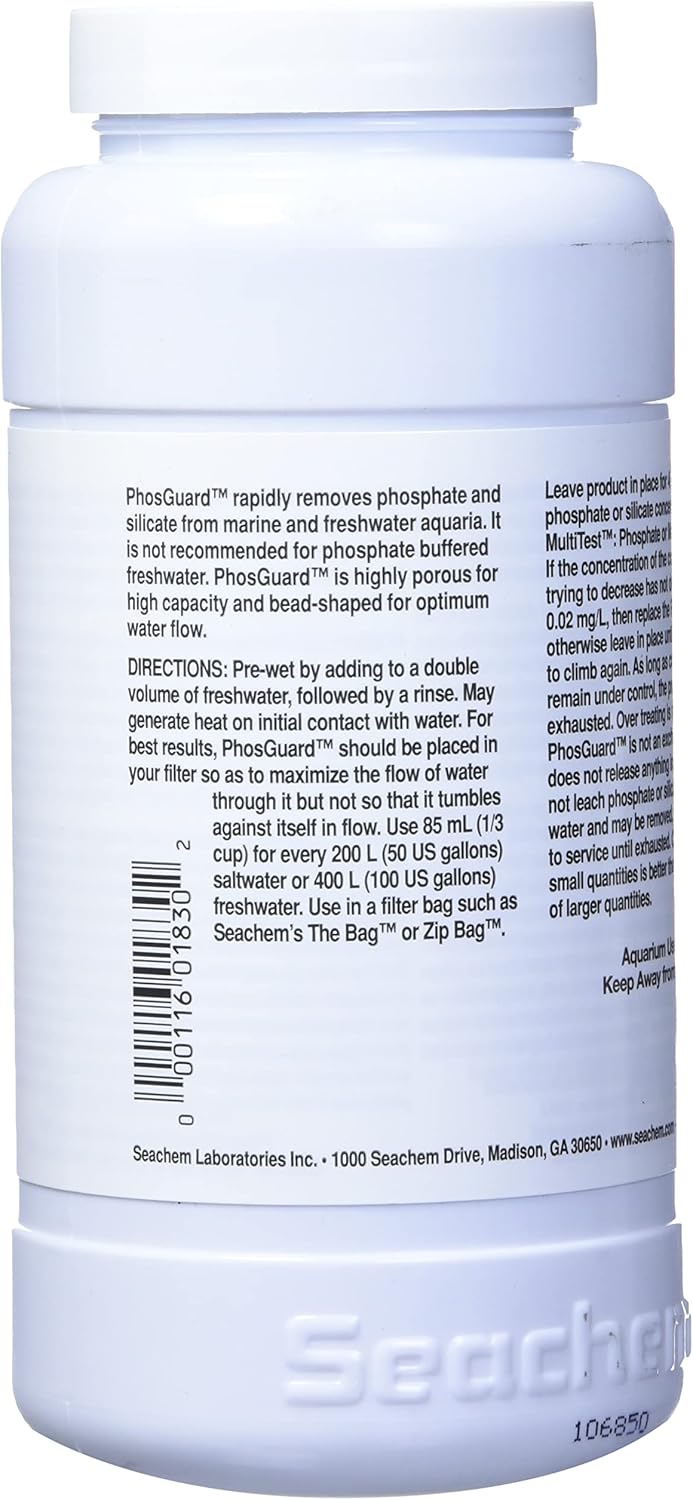
The Seachem PhosGuard is a high-capacity filtration media designed to remove phosphate and silicate from freshwater and saltwater aquariums. Because silicates are an important resource for diatom growth, PhosGuard can be particularly useful when persistent brown algae is linked to elevated silicate levels. The media is placed inside the aquarium filter where water can continuously pass through it, helping reduce unwanted compounds without requiring direct treatment of aquarium surfaces. It is best used after water testing confirms that phosphate or silicate is contributing to the problem.
- Silicate Removal: Helps reduce silicates that can contribute to persistent brown diatom growth.
- Phosphate Control: Removes phosphate alongside silicate to help manage excess nutrients in the aquarium.
- Freshwater and Saltwater Use: Suitable for use across a wide range of aquarium systems.
- Testing Recommended: Best results depend on confirming elevated phosphate or silicate before use.
- Requires Filter Placement: Needs adequate water flow through the media to work effectively.
- Periodic Replacement: The media eventually becomes exhausted and must be replaced to maintain effectiveness.
Best for: Tanks with confirmed silicate or phosphate problems
Seachem states that PhosGuard removes both silicate and phosphate from freshwater and marine aquariums.
Because silicate is used by diatoms, this type of filter media can be useful when testing or persistent patterns suggest that source-water silicates are contributing to recurring blooms.
It should not automatically be added to every aquarium with brown algae. Correct diagnosis comes first.
Follow the manufacturer’s preparation and dosing directions carefully. Seachem also notes that the product is not recommended for phosphate-buffered freshwater because it can remove that buffer.
Best use: Persistent diatom problems associated with excess silicate or phosphate.
4. API Freshwater Master Test Kit


The API Freshwater Master Test Kit is a comprehensive and trusted solution for monitoring the health of your freshwater aquarium. With the ability to perform up to 800 tests, this kit includes everything you need: 7 bottles of testing solutions, 4 test tubes with caps, and a detailed color chart for accurate readings. It measures five critical water parameters—pH, high-range pH, ammonia, nitrite, and nitrate—ensuring your betta fish lives in clean, safe, and stable water conditions. Regular use of this kit helps prevent invisible water issues that can lead to stress, disease, or even loss of your fish.
- Comprehensive Testing: Covers all essential water parameters for freshwater tanks.
- Long-Lasting Value: Provides up to 800 tests, making it cost-effective over time.
- Accurate Results: Trusted by hobbyists and professionals for precise water readings.
- Manual Process: Requires measuring and comparing to color charts, which can be time-consuming.
- Storage Space: Comes in a relatively bulky box that may take up tank cabinet space.
- No Digital Display: Lacks digital convenience some modern testers offer.
Best for: Checking the aquarium’s underlying water quality
Brown algae control becomes much easier when water conditions are measured rather than guessed.
The API Freshwater Master Test Kit measures pH, high-range pH, ammonia, nitrite, and nitrate, making it useful for tracking the nitrogen cycle and identifying water-quality problems in freshwater aquariums.
It does not test silicate, so a separate silicate test is necessary when investigating that specific factor.
Best use: New-tank cycling and routine freshwater monitoring.
What Is Brown Algae in a Fish Tank?
The brown material commonly seen in aquariums is usually a colony of diatoms rather than the large brown seaweeds people may associate with the term brown algae.
Diatoms are microscopic, single-celled organisms found naturally in freshwater and marine environments. One of their defining characteristics is a rigid cell wall containing silica. This is important in aquariums because dissolved silicates in the water can provide material that diatoms use for growth.
In a fish tank, diatoms commonly form a thin layer that looks:
- Brown
- Golden-brown
- Tan
- Rust-colored
- Dusty or powdery
The coating may appear on virtually any illuminated surface.
Common locations include:
- Aquarium glass
- Gravel
- Sand
- Rocks
- Driftwood
- Decorations
- Filter components
- Plant leaves
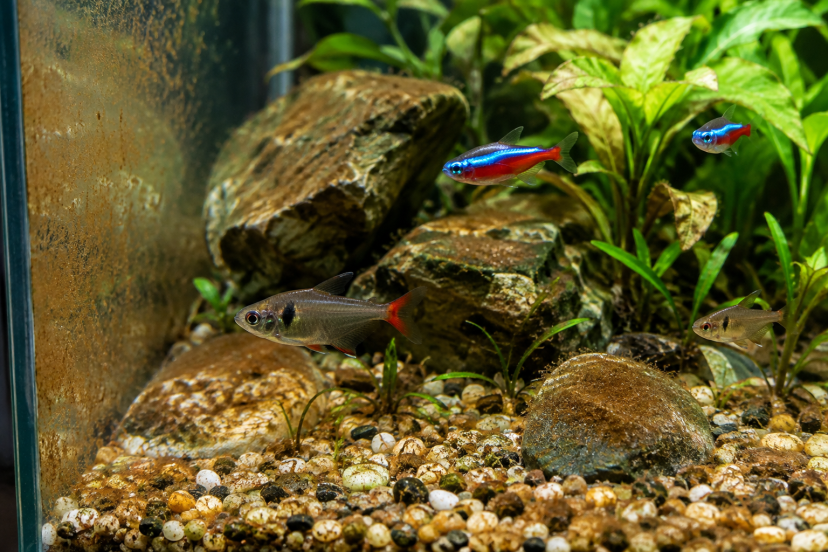
Unlike some tougher forms of algae, brown diatoms usually wipe away relatively easily. Aquarium Co-Op describes brown diatom algae as having a dusty, flour-like appearance that readily rubs off surfaces.
Is It Really Brown Algae? How to Identify Diatoms
Correct identification matters because different aquarium growths have different causes and treatments.
| Aquarium Growth | Typical Appearance | Texture | Removal |
|---|---|---|---|
| Brown diatoms | Brown, tan, or rusty film | Soft and dusty | Usually wipes away easily |
| Green spot algae | Small, bright or dark green spots | Hard | Often requires scraping |
| Green hair algae | Long green strands | Stringy | Usually pulled or brushed away |
| Cyanobacteria | Blue-green, green, brownish, or reddish mats | Slimy | Often peels away in sheets |
A simple test is to gently wipe the affected glass with an aquarium-safe pad. If the brown coating comes away easily like dust or soft film, diatoms are a likely explanation.
If the material forms a thick slimy sheet, produces an unusual odor, or behaves differently from a dusty coating, another organism may be responsible.
What Causes Brown Algae in a Fish Tank?
Brown algae rarely has a single cause. An aquarium may provide several conditions that allow diatoms to multiply at the same time.
1. The Aquarium Is New
A new aquarium is one of the most common places to encounter brown diatoms.
During the early stages of establishing a fish tank, bacterial communities, plants, microorganisms, and nutrient cycles have not reached the stability found in a mature aquarium.
Petco notes that diatoms are extremely common in new tanks while the nitrogen cycle is becoming established. As beneficial bacteria and other organisms become established, competition for nutrients can increase and the brown coating may gradually decline.
For this reason, finding brown algae several weeks after setting up a tank does not automatically mean something has gone wrong.
2. Silicates Are Available
Silicate is particularly important to diatoms because they use silica when constructing their cell walls.
Possible silicate sources include:
- Tap water
- Certain substrates
- Sand
- Rocks
- Aquarium materials
- Source water
Silicate availability helps explain why simply wiping the aquarium clean may not permanently solve the problem. If the conditions supporting diatoms remain unchanged, another coating can appear.
For a persistent outbreak, especially in an established aquarium, testing the source water can help determine whether silicates are continually being introduced.
3. Excess Organic Matter
Fish waste, decaying plant material, uneaten food, and other organic debris eventually contribute nutrients to the aquarium.
A tank receiving more food than its inhabitants consume can therefore create conditions favorable to unwanted growth.
Check areas where debris commonly accumulates:
- Beneath decorations
- Around rocks
- Inside dense plants
- Behind equipment
- Within gravel
- In low-flow sections of the tank
Cleaning visible algae while allowing large amounts of detritus to remain in the substrate treats only part of the problem.
4. Elevated Nutrients
Diatoms can take advantage of nutrients such as nitrates and phosphates.
These nutrients are not inherently bad. Nitrate, for example, is a normal product of the aquarium nitrogen cycle, while planted tanks need nutrients to support healthy plant growth.
The issue is imbalance.
Potential contributors include overfeeding, overcrowding, insufficient water changes, accumulated waste, decaying material, or inadequate maintenance.
5. Limited Competition From Healthy Plants
Live aquarium plants compete for nutrients.
In newly planted tanks, plants may still be adapting, developing roots, or recovering from transplantation. During this period they may not consume nutrients as efficiently as established, actively growing plants.
As healthy plant growth improves, competition for available nutrients can increase.
This is one reason patience often matters in newly established planted aquariums.
6. Insufficient Maintenance
Occasional missed maintenance is unlikely to create an immediate disaster, but repeated accumulation of waste can eventually favor unwanted growth.
Warning signs include:
- Heavy debris in the substrate
- Consistently elevated nitrate
- Reduced filter flow
- Large amounts of uneaten food
- Decaying plant leaves
- Long intervals between water changes
Brown algae appearing alongside these conditions should be treated as a reason to improve overall aquarium maintenance rather than as an isolated cosmetic problem.
Is Brown Algae Harmful to Fish?
A normal diatom coating generally does not directly harm aquarium fish. Both Petco and WebMD describe typical brown algae growth as largely harmless to fish.
However, that does not mean heavy growth should always be ignored.
Problems can occur indirectly.
A thick coating across plant leaves may reduce the light reaching the plant surface and interfere with healthy growth. Heavy buildup can also make it harder to notice other aquarium problems.
More importantly, brown algae can sometimes accompany excessive waste or poor water quality. Those underlying conditions may affect fish even when the diatoms themselves do not.
If fish are gasping, lethargic, refusing food, losing color, or behaving unusually, test the water instead of assuming the algae is responsible.
How to Get Rid of Brown Algae in a Fish Tank
Effective brown algae control combines manual removal with correction of the conditions encouraging growth.
Step 1: Clean the Aquarium Glass
Begin by wiping the brown film from the glass using an aquarium-safe algae pad or scraper.
Because diatoms tend to be relatively soft, aggressive scraping usually is not necessary.
Always match the cleaning tool to the aquarium material. Tools designed for glass may scratch acrylic.
Avoid household sponges that may contain soaps, detergents, fragrances, antimicrobial chemicals, or cleaning residues.
Step 2: Vacuum the Substrate
Brown algae frequently collects across gravel and sand.
During a routine water change, use a gravel vacuum to remove:
- Loose diatoms
- Fish waste
- Uneaten food
- Dead plant material
- Other accumulated debris
With gravel, the vacuum can usually be inserted into the substrate to lift trapped waste.
With fine sand, hover the intake slightly above the surface so loose debris is removed without siphoning large amounts of sand.
Step 3: Clean Rocks and Decorations
Removable decorations can be gently brushed or wiped using aquarium-dedicated cleaning tools.
A soft toothbrush reserved exclusively for aquarium maintenance works well for grooves and textured surfaces.
Never use household soap or detergent on objects that will return to the fish tank.
Step 4: Gently Clean Plant Leaves
Broad-leaved plants may develop a noticeable brown coating.
Gently wipe sturdy leaves between clean fingers or with a very soft aquarium-safe pad. Fragile plants should be handled carefully because aggressive cleaning may damage their leaves.
Remove badly deteriorated leaves rather than allowing them to decay in the tank.
Step 5: Perform a Partial Water Change
After loosening diatoms and vacuuming debris, perform the aquarium’s normal partial water change.
This helps physically export suspended material and accumulated nutrients.
Avoid unnecessarily replacing nearly all the aquarium water simply because brown algae is present. Stable aquarium conditions are more important than attempting to sterilize the system.
Step 6: Check the Filter
Inspect the filter for reduced water flow or excessive debris.
Mechanical filter media can capture suspended diatoms after cleaning, but heavily clogged media reduces filtration efficiency and circulation.
Clean reusable media according to manufacturer directions without unnecessarily destroying the biological filtration supporting the aquarium’s nitrogen cycle.
Step 7: Test the Water
For freshwater tanks, routinely monitor important parameters including:
- Ammonia
- Nitrite
- Nitrate
- pH
Ammonia and nitrite are especially important in newly established tanks because detectable concentrations can indicate that biological filtration is not fully established.
Persistent diatoms may also justify testing phosphate and silicate separately.
Testing changes the question from “How do we kill the algae?” to the more useful question: “What conditions are allowing it to keep returning?”
How to Prevent Brown Algae From Coming Back
After visible diatoms have been removed, focus on aquarium stability.
Avoid Overfeeding
Feed only an appropriate amount for the fish population.
Food that sinks into the substrate and decomposes eventually becomes part of the aquarium’s nutrient load.
Keep a Consistent Water-Change Routine
Regular partial water changes help export accumulated dissolved waste.
The ideal schedule depends on stocking level, tank size, filtration, plants, feeding, and measured water parameters rather than one universal percentage.
Remove Detritus
Vacuum accessible substrate and remove dead plant matter before it decomposes.
Pay special attention to low-flow sections where debris settles.
Maintain Good Filtration and Circulation
Appropriate filtration helps collect suspended waste while water movement reduces stagnant areas where debris can accumulate.
Avoid choosing filtration solely by tank size printed on the packaging. Stocking level and actual waste production also matter.
Keep Lighting Consistent
Diatoms still require light for photosynthesis, so increasing lighting dramatically is not a reliable brown algae treatment.
Instead, maintain a predictable lighting schedule appropriate for the aquarium’s inhabitants and live plants.
Excessively changing light duration while troubleshooting can create new algae problems.
Investigate the Source Water
If brown algae repeatedly returns despite good maintenance, consider testing the water used for water changes.
A persistent silicate source may keep supplying one of the materials diatoms need.
Reverse osmosis (RO) water can reduce many dissolved substances, but changing source water can also change hardness and mineral content. Aquariums containing fish or invertebrates with specific mineral requirements may require proper remineralization.
Can Algae-Eating Fish and Snails Remove Brown Algae?
Several aquarium inhabitants naturally graze on diatoms.
Common examples include:
- Nerite snails
- Otocinclus catfish
- Some shrimp
Aquarium Co-Op notes that animals including otocinclus catfish, snails, and shrimp commonly feed on soft diatom algae.
However, never add an animal solely as an algae-removal tool.
Every new inhabitant adds biological load and has its own requirements for tank size, water parameters, food, social structure, and compatibility.
Otocinclus, for example, should only be introduced into an appropriate established aquarium capable of supporting them. A new aquarium experiencing its first diatom bloom may not automatically be ready for additional fish.
Clean-up animals should complement good maintenance, not replace it.
How Long Does Brown Algae Last in a New Fish Tank?
There is no exact deadline for brown algae to disappear.
In many newly established aquariums, diatoms become noticeable during the first several weeks and gradually decline as the aquarium matures. Petco notes that an aquarium can take several weeks to develop sufficient bacteria and a stable nitrogen cycle.
If the aquarium is otherwise healthy, patience combined with regular cleaning may be all that is required.
Persistent growth deserves closer investigation when:
- The aquarium has been established for months.
- Brown algae returns rapidly after every cleaning.
- Silicate levels remain elevated.
- Nitrate or phosphate continually accumulates.
- Large amounts of organic debris are present.
- Plant growth is poor.
- Maintenance has become inconsistent.
In those situations, simply waiting for the tank to mature may not solve the underlying problem.
Should You Completely Clean the Tank to Remove Brown Algae?
Usually, no.
A complete teardown can create more problems than the brown algae itself, particularly in a newly established aquarium.
Beneficial microorganisms colonize filter media, substrate, decorations, and other surfaces. Excessive cleaning or replacing biological filter media unnecessarily can disrupt the biological stability the tank is still developing.
Instead, use a targeted approach:
- Wipe affected surfaces.
- Vacuum loose debris.
- Perform a normal partial water change.
- Check filtration.
- Test the water.
- Correct identifiable sources of excess nutrients or silicate.
- Continue normal maintenance.
The goal is not to make the aquarium sterile. The goal is to create a stable environment in which diatoms no longer dominate visible surfaces.
Final Thoughts: Focus on the Cause, Not Just the Brown Film
Finding brown algae in a fish tank can be frustrating, particularly when it appears soon after a new aquarium has been carefully set up. In most cases, however, the dusty brown coating is a manageable stage rather than an emergency.
New tanks often experience diatom growth while their biological communities mature. Manual cleaning, substrate vacuuming, appropriate feeding, water testing, stable filtration, and consistent maintenance are usually more valuable than aggressive chemical treatment.
If the brown algae persists in a mature aquarium, look deeper. Test the water, inspect the substrate, review feeding habits, evaluate filtration, and investigate possible silicate sources.
Removing the visible brown layer makes the aquarium look better today. Understanding why it formed is what keeps the tank cleaner tomorrow.
Frequently Asked Questions
1. What is the fastest way to get rid of brown algae in a fish tank?
The fastest approach is to wipe or scrape brown diatoms from the glass, vacuum the substrate, gently clean affected decorations and plant leaves, and perform a partial water change. Afterward, address contributing factors such as excess waste, overfeeding, elevated nutrients, or silicates so the growth does not immediately return.
2. Why does my fish tank keep getting brown algae?
Recurring brown algae can result from continuing silicate availability, accumulated organic waste, nutrient imbalance, inconsistent maintenance, or an aquarium that is still maturing. In an established tank, repeatedly returning diatoms warrant water testing and an evaluation of source water, feeding, filtration, and maintenance habits.
3. Does brown algae mean my fish tank is not cycled?
Not necessarily. Brown diatoms are particularly common while new aquariums mature, but their presence alone cannot determine whether the nitrogen cycle is complete. Test ammonia, nitrite, and nitrate rather than judging the aquarium’s cycle by appearance.
4. Will brown algae eventually go away on its own?
Brown diatoms in a new aquarium often decline as the tank matures and plants and microorganisms become better established. Manual cleaning can control their appearance in the meantime. Brown algae that continues indefinitely in an older aquarium may require investigation of silicates, nutrients, waste accumulation, and maintenance practices.
5. What eats brown algae in a fish tank?
Nerite snails, otocinclus catfish, and some freshwater shrimp commonly graze on soft diatom growth. However, livestock should only be added when the aquarium meets the species’ long-term requirements. Algae eaters can help control brown algae, but they cannot correct poor water quality or excessive nutrient accumulation.